
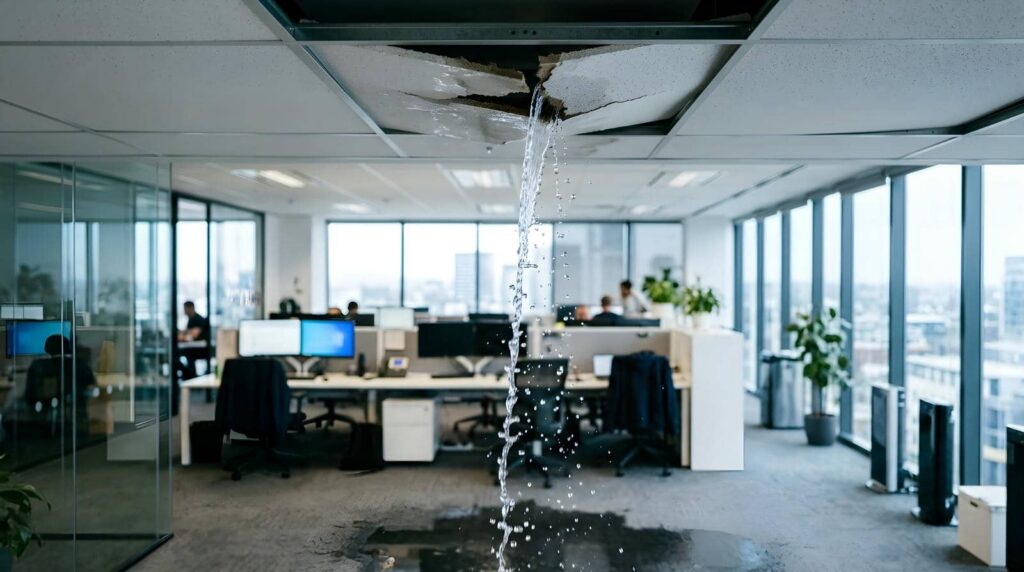
Some businesses never reopen after a major disaster, and water loss can trigger that kind of disruption fast. You need a clear repair plan that stops the source, contains spread, and documents every affected area. Technicians assess structural impact, extract standing water, dry hidden cavities, and sanitize surfaces to limit mold. The real question is which materials you can restore—and which ones you can’t.
Key Takeaways
- Identify and stop the water source, then inspect affected areas and moisture levels to document the damage.
- Extract standing water quickly using pumps or vacuums, then dry structures with airflow and dehumidifiers.
- Isolate contaminated areas, sanitize surfaces, and remove materials that cannot be safely restored.
- Repair, restore, or replace damaged components based on structural integrity and safety requirements.
- Prevent future losses with regular inspections, employee reporting, and a documented water damage response plan.
What Commercial Water Damage Repair Covers
Commercial water damage repair covers the full process of identifying, containing, and restoring damage caused by leaks, flooding, burst pipes, or other water intrusion.
You get a structured response that helps your team assess affected areas, document losses, and start commercial water damage repair with confidence.
Technicians inspect surfaces, moisture levels, and hidden cavities to determine what’s compromised. They remove damaged materials when needed, dry structural components, and clean affected contents to support safe reentry.
You stay informed through each step, so your staff knows what’s being handled and what remains operational.
This approach protects your property, supports continuity, and helps your business return to normal faster.
How to Stop Water Damage From Spreading
Once you’ve identified the source of the intrusion, act fast to limit further spread by shutting off the water supply, isolating the affected area, and removing standing water with appropriate extraction equipment.
You should close nearby doors, protect door gaps with barriers, and stop foot traffic from carrying moisture into clean zones. Turn off HVAC systems if they’re moving damp air through the building. Disconnect power only when it’s safe, and keep people away from saturated surfaces.
Remove portable items, documents, and inventory from the wet perimeter to reduce cross-contamination. Use absorbent materials on minor seepage, and monitor adjacent rooms for hidden migration.
How We Assess the Damage
You start by identifying the water source so you can stop active intrusion and determine the likely spread path.
Next, you scope moisture using inspection tools to locate affected materials, hidden saturation, and any secondary damage.
This assessment gives you the data you need to plan targeted commercial water damage repair and limit downtime.
Source Identification
Identifying the source of water intrusion is the first step in accurate commercial water damage repair. You need a clear diagnosis so your property team can act fast and avoid recurring losses.
We inspect supply lines, drains, roofing, windows, HVAC components, and plumbing fixtures to trace where water entered and how it traveled. Using this evidence, you get a focused repair plan that targets the failure point, not just the visible damage.
That approach helps protect your operations, your assets, and your confidence in the process. You’re not left guessing; you’re supported by a methodical assessment that helps your business stay resilient.
Once the source is confirmed, the next repair decisions become more precise, efficient, and aligned with your facility’s needs.
Moisture Scope
With the source confirmed, we assess the full moisture scope to measure how far the damage has spread and what needs immediate attention.
You’ll see us map affected zones, test materials with moisture meters, and check hidden cavities, baseboards, insulation, and subfloors. We document readings, compare them against dry standards, and identify where water’s migrated beyond visible staining.
This process helps you understand the true extent of loss, so you can make informed decisions fast. We also look for conditions that could support mold or structural weakening, then prioritize extraction, containment, and drying.
Drying, Extraction, and Sanitizing the Property
You use targeted water extraction methods to remove standing water quickly and limit further damage.
Next, you apply a controlled structural drying process to reduce moisture in building materials and prevent hidden deterioration.
Once the area is dry, you sanitize damaged surfaces to help control contaminants and restore a safe environment.
Water Extraction Methods
Effective water extraction starts with rapid removal of standing water, followed by targeted drying to stabilize affected materials and limit secondary damage.
You’ll benefit from using truck-mounted vacuums, portable extractors, and weighted wands to pull water from carpet, padding, and hard surfaces with precision.
For confined areas, submersible pumps and wet vacuums move bulk water quickly and reduce slip hazards.
You should also remove saturated contents that trap moisture and inhibit cleanup.
After extraction, you can apply EPA-approved sanitizers to reduce microbial growth and protect occupied spaces.
This process helps you reestablish a clean, controlled environment and supports your team’s return to normal operations.
When you act quickly and methodically, you strengthen your recovery and keep your property aligned with professional restoration standards.
Structural Drying Process
Structural drying begins once standing water is removed, using controlled airflow, dehumidification, and temperature management to drive moisture out of structural materials and reduce the risk of warping, corrosion, and microbial growth.
You’ll see technicians place air movers to target damp walls, floors, and framing, then monitor moisture levels with meters until materials reach acceptable drying targets. This process helps you limit hidden damage and keep your facility on track for reopening.
If humidity stays high, dehumidifiers pull water vapor from the air so building components can release trapped moisture faster.
You stay informed through consistent readings, equipment adjustments, and documentation. That means your team gets a clearer recovery timeline, stronger asset protection, and less interruption to daily operations.
Sanitizing Damaged Areas
After extraction and drying are complete, technicians sanitize affected areas to reduce contamination and help prevent mold, bacteria, and odor issues from spreading through the property.
You get targeted treatment on floors, walls, contents, and touchpoints using EPA-registered disinfectants matched to the materials in your building. Crews follow dwell times, apply controlled moisture, and ventilate spaces so surfaces dry cleanly without leaving residue.
If porous materials can’t be restored, they remove them to protect your team and operations. This step helps you regain a safe, professional environment faster and supports your staff’s confidence in the workspace.
Why Fast Drying Reduces Downtime
Fast drying cuts downtime because it speeds moisture removal from affected materials, letting your team begin cleanup, repairs, and restoration sooner.
You reduce the time your business sits idle because dry surfaces let contractors assess damage, stabilize spaces, and restart operations in sequence.
When you control humidity and airflow early, you limit swelling, warping, and adhesion failures that can delay reopening.
You also keep your staff aligned with a clear recovery plan, which helps everyone move faster and with confidence.
Quick drying supports cleaner work zones, shorter service interruptions, and more predictable scheduling.
That means you can protect revenue, maintain customer trust, and return your property to normal use with less disruption.
How to Handle Mold After Water Damage
When water damage is left unaddressed, mold can begin growing within 24 to 48 hours.
You need to isolate affected areas, remove contaminated materials, and dry the space completely. You should shut down HVAC zones that can spread spores, seal off work areas, and use negative air pressure when possible.
Wear proper PPE, including gloves, respirators, and eye protection, to limit exposure. Clean hard surfaces with approved antimicrobial agents and verify moisture levels with meters before reopening.
Keep humidity low and maintain strong airflow until materials read dry. If you detect recurring odor or visible growth, you need a qualified remediation team to assess contamination and control airborne spread.
This approach helps you protect occupants, preserve operations, and stay aligned with industry standards.
When to Repair, Restore, or Replace Materials
Once mold is controlled, you need to decide which materials can be repaired, which need restoration, and which must be replaced.
You should repair minor surface damage when structural integrity remains intact and moisture hasn’t caused hidden deterioration.
Restore materials when cleaning, drying, and refinishing can return them to safe use with minimal loss of performance.
Replace items that have warped, delaminated, corroded, or absorbed contamination beyond practical recovery.
You’ll also want to assess insulation, drywall, flooring, and electrical components separately because each reacts differently to water.
A qualified inspector can document conditions, verify safety, and help your team make consistent decisions.
This approach keeps your property functional, protects occupants, and supports a confident recovery plan for your business.
How to Prevent Future Water Damage
To reduce the risk of future water damage, you should inspect plumbing, roofing, HVAC systems, and drainage routes on a regular schedule and fix leaks before they escalate.
You should also test sump pumps, backflow preventers, and shutoff valves so your team can act fast during an incident.
Keep gutters, floor drains, and exterior grading clear to move water away from the building.
Maintain humidity control, because excess moisture can signal hidden problems.
Train employees to report stains, odors, or drips immediately, and document every inspection for accountability.
If you manage a facility, build a prevention plan that your staff can follow together.
With consistent maintenance and quick response, you protect property, reduce downtime, and keep your business resilient.
Frequently Asked Questions
Does Commercial Water Damage Repair Include Document and Data Recovery?
Yes, it often does. You’ll usually get document drying, digital media assessment, and data recovery referrals or services, depending on contamination and damage severity, so you can restore records quickly and protect continuity.
Can Tenants Stay in the Building During Repairs?
Usually, you can stay if repairs isolate the damage, control moisture, and keep utilities safe. You’ll hear fans hum, see barriers rise, and sometimes relocate temporarily if hazards, odors, or access issues make occupancy risky.
How Long Does the Insurance Claim Process Usually Take?
Usually, you’ll see claims resolve in 2 to 6 weeks, but complex losses can take months. You can speed things up by submitting photos, inventories, invoices, and repair estimates promptly.
Are Repairs Available After Hours or on Weekends?
Yes, you can schedule repairs after hours or on weekends, so you don’t disrupt your operations. You’ll coordinate with technicians who work around your timeline, helping you keep your team supported and your property protected.
What Certifications Should a Water Damage Contractor Have?
You should hire IICRC-certified technicians, plus mold-remediation and OSHA-trained crews; industry studies show certified teams can cut restoration delays, helping you protect your business, reduce downtime, and feel confident you belong with experts.
Wrap-Up
When you deal with commercial water damage repair, you need to act fast, isolate the source, and document the loss before it spreads. For example, if a burst supply line floods your server room overnight, quick extraction and controlled drying can save equipment and cut downtime. You’ll also reduce mold risk by sanitizing affected surfaces and replacing compromised materials. With a solid prevention plan, you can protect operations and keep your business moving.