
When water invades fast, you’re in a race against time. You first shut off the source, then technicians remove standing water with extraction pumps and industrial wet vacuums, checking for moisture trapped in walls, floors, and cavities. They also improve airflow to limit damage and mold growth. The process looks simple, but what happens after the visible water is gone can determine whether your space truly recovers. This article will answer the question, how does water extraction work?
Key Takeaways
- Emergency water extraction starts by locating standing water and stopping the source if it is safe to do so.
- Technicians use pumps, wet vacuums, or submersible equipment to remove water quickly from floors and hidden spaces.
- They clear debris and monitor suction, discharge, and flow to keep extraction efficient and effective.
- After extraction, moisture meters check for trapped water in walls, cavities, and materials.
- Fast action limits warping, staining, mold growth, and further damage to the property.
How Water Extraction Works
Water extraction works by quickly removing standing water from affected areas before it can soak deeper into floors, walls, and furnishings.
When you ask how does water extraction work, the process starts with locating pooled water and choosing the right removal method for the material involved. Technicians use pumps and wet vacuums to draw water out, then they check hidden cavities for trapped moisture.
You’re part of a careful response that limits swelling, warping, and microbial growth. After extraction, they verify moisture levels with meters so no wet pocket gets missed. This step gives you a stable starting point for drying and helps your space feel controlled again.
What To Do Right Away
If you notice indoor flooding, shut off the water source if it’s safe to do so, then move people and valuables out of the affected area right away.
Next, cut power to wet rooms at the breaker if you can reach it without stepping in standing water. Open doors and windows to improve airflow, and place towels or blocks to limit spread into dry spaces.
Document the damage with quick photos so you can support claims and keep your response organized. Stay out of contaminated water, and wear shoes with firm soles to reduce injury.
Call your restoration team promptly, because fast action helps protect structure, belongings, and indoor air quality. You’re not handling this alone; a coordinated response gives you the best chance of a clean recovery.
Tools Used for Water Extraction
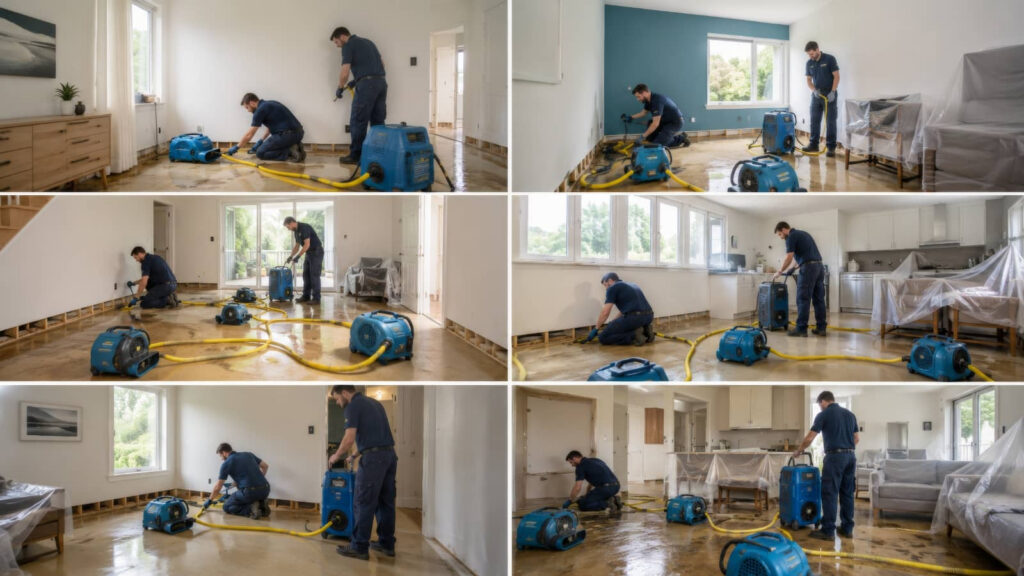
You’ll typically use extraction pumps to remove large volumes of standing water quickly and industrial wet vacuums to pull water from floors, carpets, and tight spaces.
These tools let you control the spread of damage and speed up the drying process.
When you act fast, you reduce the risk of structural weakening and secondary moisture problems.
Extraction Pumps
Extraction pumps move standing water out of a damaged area fast, helping limit how far moisture spreads into floors, walls, and contents. You use them when the volume is too high for manual removal and when speed matters.
Submersible models sit in the water and push it through a discharge hose to a safe exit point. Trash pumps handle debris-laden water more effectively, so you can keep work moving without constant clogging.
You’ll place the pump at the lowest point, check power or fuel, and verify hose routing before starting. As water level drops, you reposition the unit to maintain flow.
With the right pump, you protect your space, reduce saturation, and help your team stay in control together.
Industrial Wet Vacuums
Industrial wet vacuums help you remove smaller pools of water, pull moisture from hard-to-reach areas, and finish the cleanup after pumps handle the bulk of the job.
You’ll use them on floors, carpets, baseboards, and tight spaces where standing water hides. Their sealed tanks and strong suction let you collect liquid safely without spreading it. For the best results, move methodically and empty the tank before it reaches capacity.
- Use the correct nozzle for each surface.
- Check filters and hoses for blockages.
- Keep the machine grounded and away from live outlets.
When you work this way, you protect your space and help your team restore normal conditions faster. You’re not alone in this process; each pass brings your area closer to dry, stable recovery.
Water Extraction Step by Step
You start by evaluating the water damage to identify affected materials, moisture levels, and any immediate safety concerns.
Next, you remove standing water as quickly as possible to limit absorption into flooring, walls, and substructures.
This sequence helps you control further damage and sets up effective drying and restoration.
Assessing Water Damage
Before water removal begins, a trained technician assesses the damage to determine how far moisture has spread and which materials need immediate attention. You’ll be guided through a focused inspection that checks visible surfaces, hidden cavities, and the building’s most vulnerable zones.
This process helps your team act quickly and gives you confidence that nothing important is overlooked.
- They map affected areas with moisture meters and thermal imaging.
- They identify porous materials that may hold water and weaken.
- They document readings so your restoration plan stays accurate and coordinated.
You’re not left guessing; you’re part of a clear, organized response.
When the assessment is complete, everyone understands the scope, priorities, and next steps, which helps protect your space and supports a smoother recovery.
Removing Standing Water
Once the assessment is complete, technicians begin extracting standing water with submersible pumps, wet vacuums, and truck-mounted systems matched to the source and depth of flooding.
You’ll see them work from the lowest areas first, pulling water away fast so the damage doesn’t spread into walls, flooring, and hidden cavities. They monitor suction, discharge, and flow rate to keep the extraction steady and controlled.
If debris or sludge is present, they clear it so equipment keeps operating efficiently. You stay informed at every step, and the team adjusts methods to protect salvageable materials.
Quick removal reduces microbial growth, corrosion, and swelling, giving your space the best chance for a safe, reliable recovery.
Why Timing Matters After Water Damage?
Timing matters after indoor water damage because moisture spreads fast, so the longer water sits, the more it can soak into flooring, drywall, insulation, and structural materials.
You need rapid extraction because every minute increases the chance of warping, staining, and material breakdown. Acting quickly also helps you protect a healthier indoor environment for your household and community.
Water pressure drives liquid into seams and joints.
Temperature and humidity affect how fast materials absorb moisture.
Delays can raise repair complexity and increase disruption.
When you respond early, you reduce the scope of damage and keep the recovery process more controlled.
That speed doesn’t just save materials; it helps you regain comfort, stability, and confidence sooner.
Dry Hidden Moisture After Extraction
Even after visible water is removed, hidden moisture can remain trapped in wall cavities, under flooring, inside insulation, and behind baseboards. So you need targeted drying to prevent secondary damage.
You’ll use air movers, dehumidifiers, and sometimes heat to pull moisture from materials at a controlled rate. Your technician should check readings with moisture meters and thermal imaging, then adjust equipment placement until the structure reaches safe drying goals.
You can’t rely on touch alone, because surfaces may feel dry while framing still holds water. By drying these concealed areas quickly, you lower the risk of mold, swelling, odor, and structural weakening.
When your team works methodically, you stay informed, protected, and confident that every hidden pocket of moisture is handled.
Frequently Asked Questions
Can Water Extraction Prevent Mold Growth Completely?
No, you can’t completely prevent mold growth with water extraction alone, but you can greatly reduce the risk. You remove standing water quickly, dry materials thoroughly, and start mitigation fast enough to protect your space and belongings.
How Much Does Professional Water Extraction Usually Cost?
You’ll usually pay $500 to $3,000 for professional water extraction—small leaks, modest bills; major floods, bigger costs. You’re paying for pumps, vacuums, labor, and speed, so acting fast can protect your home and your community.
Does Insurance Typically Cover Emergency Water Extraction Services?
Usually, you’ll find insurance covers emergency water extraction if a sudden, accidental event caused the damage, but not poor maintenance. You should review your policy, document losses, and call your insurer promptly for confirmation.
How Long Does Water Extraction Take in a Typical Home?
You’ll usually need 2–6 hours for a typical home, though heavy saturation can stretch it much longer. You’ll see powerful pumps and vacuums work fast, because every minute can feel like a disaster.
Can I Stay in My House During Water Extraction?
You can sometimes stay, but you shouldn’t if water reaches outlets, ceilings, or contaminated sources. You’ll stay safer by following technicians’ guidance, limiting access, and keeping away from noisy equipment and wet surfaces.
Wrap-Up
In a real emergency, you act fast to stop the source, remove standing water, and begin drying before damage spreads. You’ll rely on extraction pumps, wet vacuums, and airflow to pull moisture from floors, carpets, and hidden spaces. When you respond quickly, you limit structural loss, reduce mold risk, and protect indoor air quality. With prompt, professional water extraction, you can turn a flooded disaster into a manageable cleanup in what can feel like the blink of an eye.