

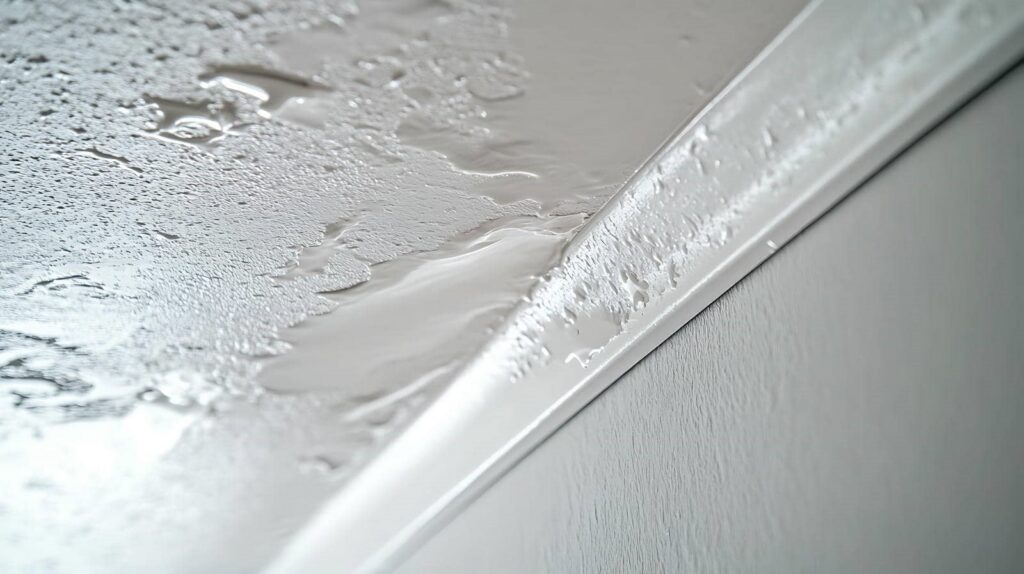
If you spot ceiling water damage after a leak or flood, you need to act fast. First, stop the moisture source and protect the room from further exposure. Then inspect for stains, sagging, bubbling, or hidden mold while you dry the area thoroughly. The real question is whether the ceiling can be repaired or must be replaced, and that depends on what the water has already done.
Key Takeaways
- Shut off the water source, protect belongings, and ventilate the room to limit further ceiling damage.
- Look for stains, sagging, musty odors, and warped drywall, which signal active or hidden water intrusion.
- Dry the ceiling quickly with fans, dehumidifiers, and airflow within 24 to 48 hours to prevent mold growth.
- Remove wet or damaged materials, then repair or replace compromised drywall and use stain-blocking primer.
- Call a professional for moisture mapping, structural assessment, sanitization, and insurance documentation if damage is extensive.
Stop the Leak and Protect the Room
First, stop the water source immediately and protect the room from further damage. You should shut off the supply valve, isolate the affected circuit if needed, and contain active dripping with buckets or plastic sheeting.
Move furniture, electronics, and textiles out of the area so you can work safely and keep your space ready for ceiling water damage repair. Next, shield flooring with tarps and place towels at entry points to limit spread.
If insulation or drywall is saturated, avoid pressing on it; you don’t want hidden collapse. Ventilate the room with fans and open windows when weather allows.
Act quickly and methodically, because your response helps your team preserve the structure, reduce cleanup, and restore a safe, comfortable home sooner.
Spot the Early Signs on Your Ceiling
You should inspect your ceiling for early discoloration, including yellow, brown, or rust-like stains that often indicate active or previous water intrusion.
Watch for sagging or bulging areas, since trapped moisture can weaken the drywall or plaster and create a structural failure risk.
When you catch these signs early, you can address the source faster and reduce the chance of deeper damage and mold growth.
Discoloration and Stains
Discoloration often appears before more obvious ceiling damage, and it’s one of the earliest signs that water has entered the structure above. You may notice yellow, brown, or rust-colored patches that spread outward as moisture moves through drywall, plaster, or paint layers.
These stains often look soft-edged or irregular, and they can intensify after each leak cycle. If you spot a new mark, check nearby plumbing, roof penetrations, HVAC lines, and insulation for active moisture.
Don’t paint over the area; that only hides the problem and delays repair. Instead, document the stain, stop the water source, and arrange prompt drying and inspection.
When you act quickly, you protect your home, reduce repair costs, and stay ahead of mold growth.
Sagging and Bulging
Sagging or bulging in a ceiling usually means water has soaked the material enough to weaken its structure. You should treat this as an urgent warning, not a cosmetic issue.
Inspect the affected area for soft spots, cracked joints, or uneven lines, especially near leaks, bathrooms, and exterior walls. If you press the surface and it feels spongy, stop using the room below and limit vibration.
Moist drywall or plaster can collapse without much notice, and trapped moisture can spread mold behind the finish. Fast ceiling water damage repair helps you protect your home and keep your space safe for everyone in it.
Bring in a qualified restoration team to find the source, dry the cavity, and replace compromised material before the damage gets worse.
What Causes Ceiling Water Damage?
Ceiling water damage usually starts when water escapes from a plumbing line, roof leak, HVAC condensate line, or appliance above the affected area.
You may also see damage from failed shower pans, loose fittings, overflowing tubs, or cracks in supply lines.
When moisture enters the ceiling cavity, it saturates drywall, insulation, and framing, then weakens finishes and joint compounds.
If you live in a multi-story building, leaks from bathrooms, kitchens, or laundry rooms often travel downward before you notice them.
Condensation can add to the problem when ducts or cold pipes sweat in humid spaces.
In every case, the source keeps feeding the ceiling until you isolate and repair it, which helps your home stay protected and your repair plan stay on track.
Dry the Ceiling and Room Quickly
You should dry the ceiling and room as quickly as possible to reduce moisture retention in the building materials.
Use fans, dehumidifiers, and ventilation to accelerate evaporation and limit the conditions that support mold growth.
The faster you remove the water, the lower your risk of staining, sagging, and secondary damage.
Speed Up Drying
Dry the affected ceiling and room as quickly as possible to limit staining, structural weakening, and mold growth.
You should remove standing water, then increase airflow with box fans aimed across the damp surface, not directly at fragile finishes. Open windows and interior doors if outdoor conditions help ventilation.
Run a dehumidifier in the room to pull moisture from the air, and keep HVAC supply and return paths unobstructed.
If insulation is wet, remove only what you can access safely, because trapped moisture slows recovery.
Check moisture levels with a meter or by touch until the surface feels dry and cool, not damp.
Stop Mold Growth
When moisture lingers after a leak, mold can begin developing within 24 to 48 hours, so fast drying is critical to stop growth before it spreads.
You should remove wet insulation, open access points, and run high-velocity fans with a dehumidifier to lower humidity below 60%.
If the ceiling cavity stays damp, mold spores can colonize drywall, wood framing, and paint layers, causing odors and stains.
Check hidden areas with a moisture meter, and keep air moving across the affected room.
If you spot discoloration, soft drywall, or a musty smell, act quickly and isolate the area.
Repair Stains, Sagging, and Bubbling
Stains, sagging, and bubbling signal that ceiling materials have absorbed moisture and need prompt repair. You should isolate the source, then dry the area fully before you touch the surface.
Clean discoloration with a stain-blocking primer, and feather damaged edges so the finish blends cleanly. If the drywall has dipped, support it with fasteners or replace loose sections after the substrate feels firm.
For bubbled paint, scrape away all failed coating and sand the shift smooth. Match texture, then repaint with compatible products to restore a uniform look.
- Check for hidden dampness
- Use a moisture meter
- Protect nearby finishes
- Ventilate the room well
- Inspect seams and joints
When to Replace a Water-Damaged Ceiling
You should replace a water-damaged ceiling if the drywall or plaster has lost structural integrity, continued drying doesn’t restore firmness, or the damage extends across a large area.
You’ll usually notice soft spots, bowed sections, separated joints, or material that crumbles when you probe it. If the ceiling sags, feels spongy, or shows repeated cracking after the source is fixed, repair won’t give you a reliable result.
Replace the affected section when damage reaches insulation, framing, or electrical components, since patching can leave weak points behind. A full replacement also makes sense when the affected area is too large for a stable patch.
Acting decisively helps you protect your home and stay confident that the finished ceiling will perform as it should.
Prevent Mold After Ceiling Water Damage
To prevent mold after ceiling water damage, dry the area quickly and completely, because mold can start developing within 24 to 48 hours in damp drywall, insulation, and framing.
You should reduce moisture fast so your home stays safe and your repair effort lasts. Remove wet materials, open the ceiling cavity, and run fans plus dehumidifiers until readings stabilize.
Check hidden spots so no moisture lingers in seams or around fasteners.
- Inspect insulation for saturation
- Verify wood framing feels dry
- Discard porous materials that stayed wet
- Clean exposed surfaces with approved products
- Monitor humidity below 60%
If you stay systematic, you protect the structure and help your household feel confident again.
Call a Pro for Ceiling Water Damage Repair
If the leak has soaked insulation, warped drywall, or spread beyond a small area, call a water damage restoration pro right away.
You’ll get a fast inspection, moisture mapping, and a repair plan that targets hidden damage before it worsens. A qualified team can remove wet materials, dry structural cavities, sanitize affected areas, and coordinate ceiling replacement so you don’t miss critical steps.
You also gain support with insurance photos, loss documentation, and scope estimates, which helps you stay organized and confident.
If you smell mustiness, see staining, or notice sagging, don’t wait for the ceiling to fail. When you bring in experts early, you protect your home, your schedule, and your peace of mind with a crew that knows the process.
Frequently Asked Questions
How Long Does Ceiling Water Damage Repair Usually Take?
You’ll usually need one to three days for minor repairs, while larger damage can take a week or more. You’ll speed drying, inspection, patching, and repainting by acting quickly and fixing the source first.
Can I Paint Over a Repaired Ceiling Stain?
Yes, you can, but you should seal the repaired area first; otherwise, the stain will return like a ghost in fresh paint. You’ll blend better, protect the finish, and keep your ceiling looking uniform.
Does Insurance Cover Ceiling Water Damage Repairs?
Yes, you may get coverage if a sudden, accidental event caused the damage, but not for neglect or wear. You’ll need to document the loss, review your policy, and file your claim quickly.
How Do I Know if Insulation Got Wet Above the Ceiling?
You can tell if insulation’s wet when your ceiling feels like a damp sponge: stains spread, paint bubbles, odors linger, and drywall sags. Inspect an access point or have a pro check moisture promptly.
Is Ceiling Water Damage Repair Safe to Do Myself?
Yes, you can handle minor repairs yourself if the area’s dry and stable, but you shouldn’t touch sagging, moldy, or electrical-affected ceilings. You’ll protect your home better by calling a professional when damage looks extensive.
Summary
When you handle ceiling water damage repair after leaks or flooding, you’re really racing the clock. Stop the source, dry the area fast, and watch for stains, sagging, or bubbling before small trouble turns into a Trojan horse of mold and structural decay. If the ceiling has lost its strength, don’t hesitate to bring in a pro. Quick, careful action helps you restore the space and protect your home for the long haul.