

When your house floods, you need to cut power first, then remove standing water before it spreads into framing, subfloors, and hidden cavities. You can handle shallow water with a wet/dry vacuum and deeper pooling with a submersible pump, but timing matters more than tools alone. The longer moisture stays trapped, the higher the risk of structural damage and mold. What you do next can change the whole recovery.
Key Takeaways
- Shut off power, wear protective gear, and confirm the water source is stopped before entering a flooded area.
- Use wet/dry vacs, submersible pumps, squeegees, and extractors to remove standing water quickly.
- Call professionals for major flooding, saturated drywall, multiple rooms, or hidden moisture behind walls.
- Move salvageable furniture and items to dry areas, and keep them off damp floors with blocks or foil.
- Dry, disinfect, and monitor affected areas daily with fans, dehumidifiers, and moisture readings to prevent mold.
Start Water Extraction Safely
Before you begin water extraction, cut power to the flooded area at the breaker panel and wear protective gear, including waterproof boots, gloves, and eye protection.
Next, confirm the water source is stopped, then assess depth, contamination, and structural hazards before you enter.
In flooded house water extraction, you should remove standing water with a pump or wet vacuum rated for the job, keeping cords, hoses, and outlets clear.
Work from the perimeter toward the center so you can maintain footing and control debris.
Place removed materials in sealed bags or bins, and ventilate the space with fans if safe.
If you smell gas, see sagging ceilings, or find sewage, leave and call qualified help.
You’re protecting your team and home.
Why Fast Action Reduces Flood Damage
You need to remove floodwater fast because standing water keeps seeping into walls, flooring, and contents.
Quick extraction reduces saturation, slows material swelling, and limits structural damage. The sooner you act, the less time moisture has to spread and weaken the building.
Quick Water Removal
Quick water removal limits how far moisture spreads through a flooded house, reducing the time water has to soak into drywall, flooring, insulation, and furniture. You need rapid extraction to lower saturation levels before water migrates through seams and gaps. Your crew should use pumps, vacuums, and weighted extraction tools to pull standing water fast.
You cut absorption in porous materials.
You speed up drying conditions for the affected area.
You help your recovery team work from a cleaner, more stable starting point.
When you act quickly, you keep control of the loss and stay aligned with others facing the same disruption. That shared urgency matters.
Fast removal doesn’t fix everything, but it gives you a stronger first response and a clearer path forward.
Limit Structural Damage
Fast water removal also helps limit structural damage by cutting the time moisture has to weaken framing, swell subfloors, and compromise joints, fasteners, and load-bearing materials.
You reduce stress on joists, drywall backing, and wall plates when you extract standing water quickly and keep humidity controlled. If you wait, wood fibers absorb more water, adhesives fail, and metal connectors can corrode.
You also protect finish flooring from cupping, delamination, and edge lift. In a shared recovery effort, you want every crew member moving in sync: pump, vacuum, monitor, and dry.
That coordinated response helps your home stay stable, safer, and easier to restore. With prompt action, you’re not just removing water—you’re preserving the structure your household depends on.
Which Water Removal Tools Work Best?
For flooded house water extraction, the best tools depend on the water depth, surface type, and how much moisture has spread into the structure.
You’ll usually get the best results by matching the tool to the job:
Wet/dry vacs handle shallow water on tile, vinyl, and sealed concrete.
Submersible pumps move larger volumes fast from deeper pooling.
Squeegees and floor mops push remaining water toward drains or vacuum access.
Use weighted extraction tools on carpet to pull water from fibers and padding.
For hard surfaces, pair a pump with a wet vac to remove standing water and residue.
If you act quickly and use the right mix, you keep your space recoverable and stay in control of the cleanup.
When to Call Flood Water Extraction Pros
You should call flood water extraction pros when you see major water intrusion signs, like standing water, saturated drywall, or failed flooring.
You also need expert help if you smell musty odors, notice warping, or find moisture behind walls, since hidden damage can keep spreading.
Quick professional extraction reduces structural damage and helps protect your contents.
Major Water Intrusion Signs
When water keeps rising after the source is shut off, or flooding reaches multiple rooms, it’s time to call flood water extraction pros. You need a fast, coordinated response when the intrusion exceeds towels, buckets, or a shop vac.
In your situation, look for these major signs:
- Water covers floors beyond one room
- Standing water blocks safe walking paths
- Saturation returns after surface removal
These conditions mean you’re dealing with active intrusion, not a minor spill. You belong with a team that can isolate affected areas, deploy extraction equipment, and move moisture out quickly.
Acting now helps limit disruption and keeps your home recovery on track. If you’re unsure, treat spread, depth, and speed as your guide.
Hidden Damage Warning Signals
Not all flood damage is visible right away. You may see clean surfaces while moisture hides inside wall cavities, under flooring, and behind baseboards.
Call flood water extraction pros if you smell musty odors, hear soft cracking, notice swelling, buckling, or see new stains. Watch for condensation on windows, peeling paint, and loose trim, which often signal trapped moisture.
If outlets, appliances, or HVAC parts were exposed, treat the area as compromised. You’re not overreacting by acting early; fast extraction limits microbial growth, protects framing, and reduces repair scope.
Pros use moisture meters, thermal imaging, and controlled drying to find hidden loss. When your space feels off, trust that signal. Early intervention helps you and your household recover with confidence.
What Happens During Professional Extraction?
Professional extraction starts with a rapid assessment of standing water, moisture spread, and affected materials. Then technicians deploy pumps, truck-mounted vacuums, or portable extractors to remove water as quickly as possible. You’ll see a structured workflow that limits further contamination and keeps your property’s recovery on track.
They map the loss zone and set safe access points.
They extract bulk water from floors, carpets, and low cavities.
They monitor moisture levels to confirm progress and target remaining pockets.
You stay informed through clear updates, so you know what’s being removed and why. Crews also separate salvageable items from unsalvageable debris, helping your team make faster decisions.
This step reduces standing water, supports faster restoration, and gives you a clear path forward with professionals who understand your situation.
Dry Floors, Walls, and Subfloors
Once standing water is removed, technicians focus on drying floors, walls, and subfloors to stop hidden moisture from spreading.
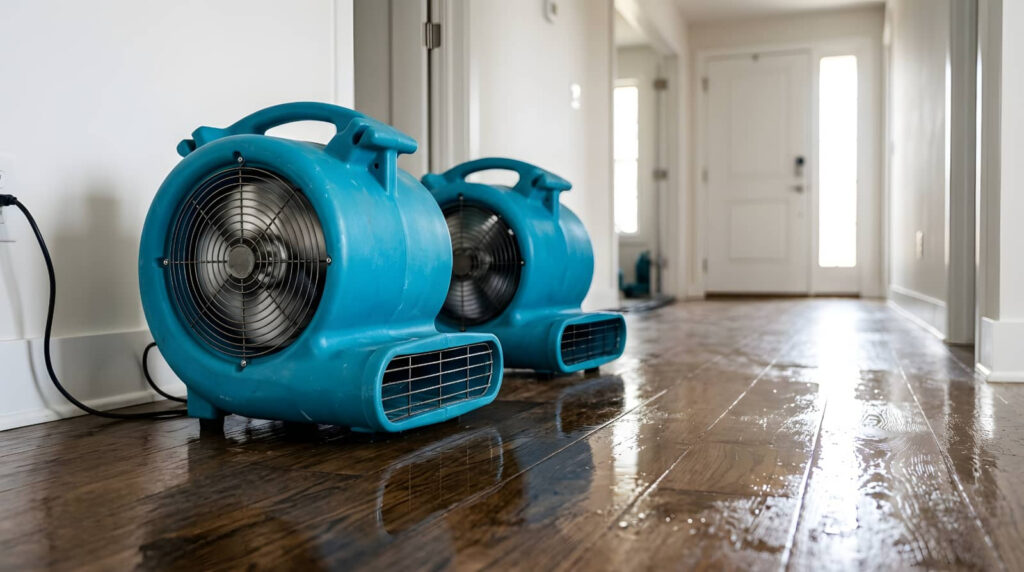
You’ll see them place air movers to push dry air across surfaces and dehumidifiers to pull water vapor from the room. They lift baseboards, expose wall cavities, and drill small access points when needed so airflow reaches trapped materials.
In layered floors, they dry the carpet pad, underlayment, and framing together to keep moisture from wicking upward.
You stay informed with meter readings, so you know what’s drying and what still needs attention. This controlled process reduces swelling, warping, and material breakdown.
Spot Hidden Moisture Before Mold Starts
Even after surfaces feel dry, technicians check for hidden moisture in wall cavities, subfloors, insulation, and trim, because trapped water can keep spreading long after visible standing water is gone. You need these checks to stop mold before it starts and to keep your property’s recovery on track.
We use meters, thermal imaging, and targeted probes to find damp pockets that air movement can miss.
- Behind baseboards and casing
- Under flooring seams and connections
- Inside insulation and framing voids
When readings stay elevated, we isolate the area, increase drying, and retest until levels normalize. That process protects your home and helps your team stay ahead of secondary damage.
You’re not guessing; you’re working with clear data, steady communication, and a plan that supports your space.
Save Furniture, Rugs, and Personal Items
Quick action can save furniture, rugs, and personal items by limiting how long they stay wet, which reduces swelling, staining, and mold growth.
You should move salvageable pieces to a dry, stable area and keep them off damp flooring with blocks or foil. Remove cushions, drawers, and loose textiles so air can reach concealed surfaces.
Blot liquid from wood, leather, and fabric with clean towels; don’t rub, because that can drive moisture deeper. Roll rugs face out, support them evenly, and separate layered materials.
Bag small keepsakes, documents, and electronics only after you’ve isolated them from standing water. Label each item, group similar materials together, and track what needs professional cleaning so your team works efficiently and protects what matters most.
Prevent Mold and Secondary Damage
As moisture lingers, you need to stop mold before it starts by removing standing water, opening airflow paths, and lowering indoor humidity as fast as possible. You’re protecting your home’s structure, finishes, and shared spaces when you act within the first 24 to 48 hours.
Use dehumidifiers, fans, and targeted extraction to dry wall cavities, subfloors, and hidden seams. Check for damp insulation, baseboards, and carpet backing; these areas trap water and feed growth.
- Measure humidity and surface moisture daily
- Remove porous materials that stay wet
- Disinfect hard, nonporous surfaces after drying
If odors persist, document affected zones and keep drying until readings stabilize. You’re not alone here; decisive cleanup helps your home stay safe, sound, and ready to reoccupy.
Frequently Asked Questions
How Do I Know if Floodwater Is Contaminated?
If your water smells sewage-like, looks muddy, came from drains, toilets, or outside runoff, treat it as contaminated. You shouldn’t touch it bare-handed; use gloves, boots, and a respirator, then call professionals.
Should I Turn off Electricity Before Entering the House?
Yes—turn off electricity first, if you can do it safely from outside. You shouldn’t enter standing water near energized circuits. Call your utility or an electrician before you inspect, move items, or start extraction.
Can I Stay in the Home During Water Extraction?
You generally shouldn’t stay inside during extraction; you’re safer leaving because crews use powerful equipment, standing water may hide hazards, and humidity, debris, and contaminants can worsen exposure. Ask the technician when it’s safe.
What Insurance Documents Should I Prepare After Flooding?
You’ll want your policy, claim number, photos, videos, receipts, inventory, mitigation invoices, contractor estimates, and correspondence logs—because paperwork, unlike soggy carpet, never dries itself. Submit everything promptly, and you’ll belong in the approved-claim queue.
How Long Does a Typical Flood Damage Claim Take?
A typical flood damage claim takes 30 to 90 days, but you’ll see delays if inspections, documentation, or disputes slow things down. You can speed it up by submitting complete records promptly and staying in contact.
Final Thoughts
You’ve seen why fast water extraction matters: every hour of delay can increase repair costs and mold risk. In fact, mold can begin growing in as little as 24 to 48 hours after flooding. If you act quickly, use the right tools, and call pros when damage is extensive, you improve your recovery outcome. Thorough drying, moisture checks, and sanitizing finish the job and help you prevent secondary damage.