

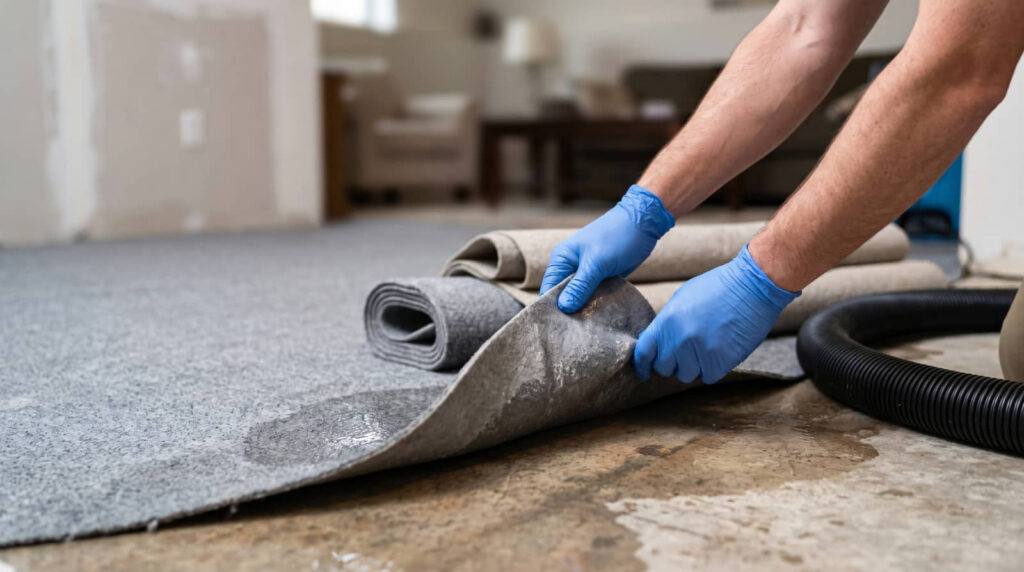
When you remove basement water quickly, you stop moisture from spreading into walls, flooring, and hidden cavities. You also reduce pressure on foundation materials before they weaken further. The right extraction method depends on how much water you’re dealing with and where it’s trapped. But pumping out visible water is only the first step, because what stays behind can still drive damage and mold.
Key Takeaways
- Remove standing water immediately with pumps or wet vacs to prevent spread and speed drying.
- Check for electrical hazards, structural damage, and contamination before entering the basement.
- Use air movers and dehumidifiers together to lower humidity and dry surfaces faster.
- Lift rugs, baseboards, and wet materials so hidden moisture in floors and walls can escape.
- Monitor moisture levels until readings stabilize, and call a professional if drywall, insulation, or sewage is involved.
What Basement Water Extraction Removes First
Basement water extraction removes the standing water first, because quick removal limits how far moisture can spread into floors, walls, and framing.
You’ll usually see technicians target pooled water around drains, seams, and low spots before they move to thinner surface moisture. During basement water extraction, they also clear water trapped under rugs, padding, and loose flooring, since those layers hold liquid longer than exposed concrete.
You get faster drying when extraction begins where the water sits deepest, then continues across the room in controlled passes. That approach lets your space join the recovery process sooner, with less lingering dampness underfoot.
It also creates better access for air movement and dehumidification, so you can track drying with more confidence.
Why Fast Water Removal Protects Your Foundation
When water sits in your basement too long, it can seep into the slab, mortar joints, and foundation wall cracks, increasing hydrostatic pressure and weakening materials over time.
By removing water fast, you lower that pressure before it pushes farther into the structure. You also limit capillary rise, so moisture doesn’t keep migrating through concrete and block.
Quick extraction helps preserve bond strength in mortar and reduces spalling, cracking, and edge deterioration. It also keeps saturated soils from staying against your foundation, where they can shift and stress walls.
When you act promptly, you protect the load-bearing system and keep your space stable, dry, and ready for your crew to restore with confidence.
Fast response means your home stays in the community you trust.
How to Assess Basement Water Damage Safely
Once the standing water is gone, you can inspect the basement more safely and identify damage before it gets worse.
Before you enter, shut off power to the area and wear boots, gloves, and a mask.
Check walls, floors, and joists for cracking, bowing, staining, or soft spots. Press on drywall and wood trim; if they feel spongy, mark them for removal.
Look for rust on fasteners, swollen baseboards, and peeling paint, which signal trapped moisture. Use a flashlight to inspect corners, sill plates, and utility penetrations.
Smell for musty odors, which often mean hidden dampness. If you notice sagging ceilings, shifting stairs, or any electrical damage, stop and call a qualified professional.
Staying methodical helps your crew protect the space and move forward together.
How Basement Water Extraction Works
You start basement water extraction by removing standing water with pumps, wet vacuums, or extraction tools, which reduces the immediate load on floors and walls.
Next, you move into drying and dehumidification, using air movers and dehumidifiers to lower moisture levels in surfaces and the air.
Fast removal and controlled drying help limit structural damage, moisture retention, and mold growth.
Water Removal Process
Water extraction starts with locating the source and measuring how much water has spread through the basement. You then shut off power to wet zones, isolate the area, and set up a clear extraction path.
Technicians use submersible pumps for standing water and wet vacuums for pooled moisture on floors, seams, and low spots. They work from the outer edges toward the center so you don’t push water deeper into cracks or under trim.
They also remove soaked materials that trap water and inspect drains, sump pits, and wall bases for hidden pockets. Throughout the process, you’ll get precise control over where water goes, which helps protect framing, flooring, and foundation surfaces.
This method keeps your basement team-oriented and focused on fast, efficient removal.
Drying And Dehumidification
After standing water is removed, the focus shifts to pulling residual moisture out of concrete, framing, insulation, and air pockets.
You set up high-capacity air movers to accelerate evaporation from wet surfaces, then place commercial dehumidifiers to capture that vapor before it settles again.
You monitor temperature, humidity, and material moisture readings so you can keep the drying zone in the correct range.
If you’re part of a home or facility team, this step protects everyone’s space by reducing warping, corrosion, and mold growth.
You also open hidden cavities with targeted airflow when needed, because trapped moisture can linger behind walls and under flooring.
Drying continues until readings return to safe baseline levels, giving you a stable, healthy interior.
What Equipment Removes Basement Water Best
For fast basement water removal, you’ll get the best results with a high-capacity submersible pump because it can move large volumes quickly.
Use a wet-dry vacuum to collect residual water in low spots and along edges after the bulk removal is done.
Then run air movers and dehumidifiers to lower moisture levels and reduce the risk of structural damage and mold growth.
High-Capacity Submersible Pumps
When basement water rises quickly, high-capacity submersible pumps move large volumes fast and usually do the best job of limiting damage. You place one in the deepest point, and it pushes water through a discharge hose to a safe outlet.
Choose a pump with enough gallons per hour for your basement size and inflow rate.
- Check flow rating before you buy.
- Match hose diameter to pump output.
- Keep the intake clear of debris.
- Use a grounded outlet and GFCI protection.
You’ll work more confidently when your gear fits the job, because fast removal lowers moisture exposure and supports quicker drying.
Within your team of responders, this pump is often the first tool that gets results.
Wet-Dry Vacuum Use
Wet-dry vacuums handle smaller basement water jobs by pulling up shallow standing water, damp sludge, and residual moisture from floors, corners, and tight spaces.
You should use a unit rated for liquid pickup, with a float shutoff and a hose long enough to reach low areas without moving the machine constantly.
Fit a wide floor nozzle for open concrete, then switch to a crevice tool for edges, seams, and around posts.
Empty the tank often so suction stays strong and debris doesn’t recirculate.
Keep the filter configuration correct for wet use, and check the hose for clogs or kinks.
For your crew or household, this tool is best when water depth is low and you need controlled cleanup after pumping.
Air Movers And Dehumidifiers
After you’ve removed standing water with a wet-dry vacuum or pump, air movers and dehumidifiers handle the moisture that’s left behind in concrete, framing, and air.
You’ll get the best drying results when you pair them correctly:
- Position air movers low and angle them along walls and floors.
- Run dehumidifiers in the same enclosed space to pull vapor from the air.
- Close windows and doors so the system recirculates dry air efficiently.
- Check humidity and surface moisture daily, then adjust placement.
Air movers speed evaporation; dehumidifiers capture that released water before it settles back into materials.
This combo reduces swelling, odor, and mold risk.
If you’re working with the right crew and equipment, you can dry the basement faster and protect the structure together.
How to Dry Walls, Floors, and Hidden Moisture
Once the standing water is gone, you should dry walls, floors, and hidden cavities quickly to limit moisture migration and prevent mold growth.
Remove baseboards, then expose the lower wall edge so air can reach wet drywall and framing. Use controlled airflow across surfaces, not directly into them, to pull moisture out evenly.
Lift rugs and padded materials, and separate flooring seams if you can do so safely. Check subfloors, sill plates, and wall cavities with a moisture meter, because trapped water often lingers there after visible areas look dry.
If you’re working as a team, assign one person to monitor readings while another adjusts air paths.
Keep drying equipment running until moisture levels stabilize and match nearby dry materials.
How to Prevent Mold After Water Removal
To prevent mold after water removal, you need to eliminate moisture quickly and keep materials dry long enough for spores to remain inactive. You can do this by controlling humidity, air movement, and surface temperature in the affected area.
Stay methodical and work like a team that values clean, dry spaces.
- Remove wet contents and isolate damp zones.
- Run dehumidifiers to hold relative humidity below 60%.
- Use fans to move air across surfaces, not just around the room.
- Check hidden spaces, such as baseboards, cavities, and under flooring, until they’re dry.
You should also clean hard surfaces with a detergent solution and discard porous items that stay wet too long.
When you keep conditions dry, you protect your home and support everyone who lives there.
When to Call a Water Damage Pro
Call a water damage pro when the water has soaked into drywall, insulation, subflooring, or other hidden spaces, because drying those areas completely takes specialized equipment and verification.
You should also call when the water came from sewage, a storm drain, or another contaminated source, since you’ll need controlled removal and sanitation.
If you notice warped trim, buckled flooring, persistent dampness, or a musty odor after surface water’s gone, the moisture is likely still trapped.
A pro can use thermal imaging, moisture meters, extraction units, and commercial dehumidifiers to map the loss and confirm dry standards.
That’s the safest path when you want your basement crewed by people who know the system and can finish the job right.
How to Keep Your Basement Dry After Cleanup
After cleanup, you need to stop new moisture from getting back in, so inspect the basement for cracks, failed sealant, leaking windows, and any drainage problems around the foundation. Seal gaps with hydraulic cement, caulk, and exterior-grade membrane so water can’t track indoors.
Keep your group’s dry baseline with these steps:
- Run a dehumidifier and hold relative humidity below 60%.
- Extend downspouts at least 6 feet from the wall.
- Test sump pumps monthly and add a backup battery.
- Store boxes on shelves, not on concrete.
Check for condensation on pipes and ducts, then insulate cold surfaces. Keep floor drains clear, clean gutters, and verify grading after storms.
If you stay consistent, your basement will resist recurring seepage and stay ready for safe use.
Frequently Asked Questions
What Should I Do Before Starting Basement Water Extraction?
First, shut off power to the area, identify the water source, and remove valuables. Then document damage, wear protective gear, and check for hidden hazards so you can start extraction safely and efficiently.
How Long Does Basement Drying Usually Take?
You’ll usually dry a basement in 2–5 days, but severe saturation can take a week or more. You’ll speed drying with extraction, dehumidifiers, airflow, and steady temperature control, reducing mold and structural damage.
Can I Stay in the Basement During Water Removal?
Usually not; you’ll stay safer outside the work area. Wet vacuums, electrical gear, and airborne contaminants can create hazards. If you must enter, wait for clearance, wear protective boots, and follow the crew’s safety instructions.
Will Insurance Cover Basement Water Extraction Costs?
Usually, yes, if your policy covers sudden water damage and you file promptly. You’ll need photos, invoices, and a claims adjuster’s approval. Review exclusions for seepage, flood, or neglect before scheduling extraction.
Do I Need to Replace Soaked Carpet and Padding?
Usually, yes—if you’re dealing with soaked carpet and padding, you should replace them. For example, after a pipe break, damp padding traps moisture and odors; you’ll prevent mold by removing it quickly.
Summary
You’ve seen how basement water extraction clears the first flood like a sweep of the tide, then opens the path for fast indoor drying. When you pull standing water quickly, you ease pressure on your foundation and cut mold’s foothold before it takes root. Keep air moving, keep humidity low, and watch hidden moisture as carefully as a doctor watches a pulse. Act fast, dry thoroughly, and your basement can recover strong.