

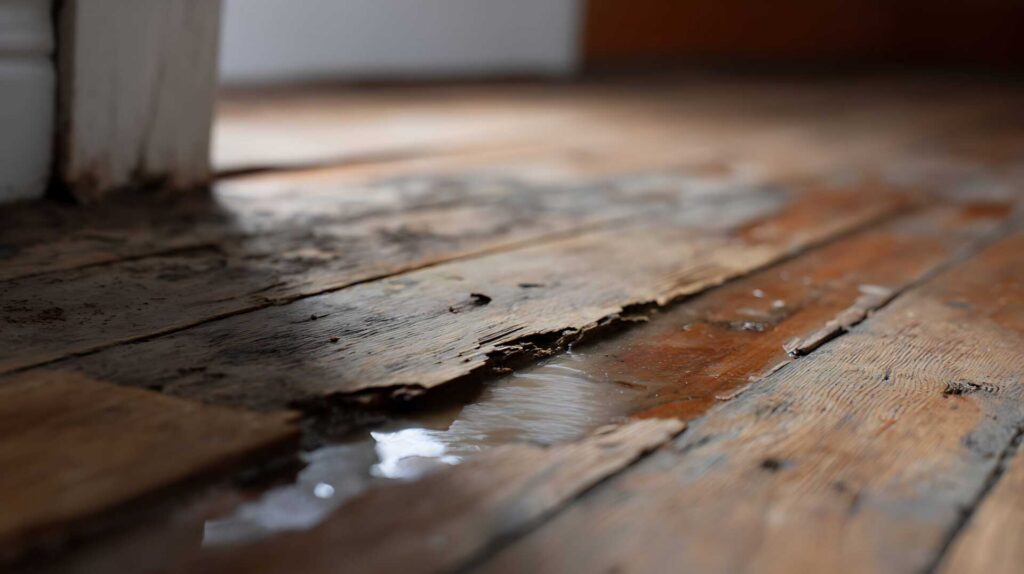
When water hits your hardwood floor, you need to act fast to limit swelling, staining, and mold. You’ll start by stopping the source, extracting standing water, and driving air across the surface with fans and dehumidifiers. Then you’ll need to judge whether drying alone will stabilize the boards, or if sanding, selective plank replacement, or a full repair path is unavoidable. The signs can be subtle, and the next step matters.
Key Takeaways
- Shut off the water, remove standing water, and dry hardwood floors quickly with fans and dehumidifiers.
- Inspect for cupping, buckling, staining, mold, and hidden subfloor moisture to judge damage severity.
- Repair only damaged planks, preserve sound boards, and blend replacements for a seamless finish.
- Use moisture meters and steady airflow to confirm the floor is fully dry before refinishing or reinstalling trim.
- Prevent future damage by fixing leaks, controlling humidity, and checking plumbing, appliances, and seals regularly.
Dry Hardwood Floors Fast
Act quickly to dry hardwood floors fast after water exposure, because the longer moisture sits, the higher the risk of cupping, swelling, staining, and subfloor damage.
You’ll improve hardwood floor water damage repair results by shutting off the source, removing standing water with a wet vac, and increasing airflow with fans and dehumidifiers.
Lift area rugs, baseboards, and any furniture that traps moisture. If you can, open windows only when outside humidity is lower than indoors; otherwise, keep the space sealed and conditioned.
Use a moisture meter to track progress across boards and seams. For best results, keep temperatures moderate and avoid direct heat, which can warp planks.
When you act fast, you protect your floor, support a healthier home, and stay part of the group that restores damage the right way.
How to Tell How Bad the Damage Is
You should first determine whether the water affected only the surface boards or has reached the subfloor, since subfloor saturation usually indicates a more serious repair.
Check for visible staining, cupping, or buckling, because these distortions show how much moisture the wood absorbed and how long it stayed wet.
You should also inspect for mold growth or a musty odor, as those signs often mean hidden moisture remains and the damage may require more than drying or sanding.
Surface Vs. Subfloor Damage
When water reaches a hardwood floor, the visible damage on the surface often tells only part of the story, because moisture can also migrate into the underlayment and subfloor.
You should inspect the area with a moisture meter and compare readings across affected and unaffected sections. If only the finish layer feels damp and the boards stay stable, you may only need controlled drying.
If readings stay elevated below the boards, the subfloor likely needs attention, and you’ll want to open small access points to confirm spread.
You can feel more confident when you identify whether the problem is localized or structural, because that guides repair choices and keeps your floor community strong.
Persistent moisture, soft spots, or displaced fasteners usually point to deeper damage requiring professional intervention.
Staining And Cupping
Staining and cupping help reveal how far moisture has penetrated, because discoloration often appears as minerals, tannins, or debris are drawn into the wood while the boards themselves begin to deform.
You’ll usually see light rings, gray patches, or darker streaks where water sat longest. Cupping means the board edges rise higher than the center, showing the plank absorbed moisture unevenly.
When you inspect the floor, look for tight joints, raised edges, and a soft or uneven walking surface.
- Shallow staining may fade after controlled drying.
- Moderate cupping can flatten as the wood equalizes.
- Severe distortion often means sanding or replacement.
If the pattern spreads across several boards, you’re likely dealing with deeper damage that needs prompt, coordinated repair to protect your floor’s long-term integrity.
Mold And Odor Signs
Musty smells and visible mold are strong clues that the water damage has gone beyond the surface. You’re likely dealing with trapped moisture in the subfloor, underlayment, or wall cavities, not just a wet finish.
If the odor intensifies in closed rooms or returns after cleaning, you may need professional moisture testing to check relative humidity, plank moisture content, and hidden contamination.
Dark spotting, fuzzy growth, or discoloration around seams means spores can spread quickly and compromise indoor air quality. You should isolate the area, improve ventilation, and avoid aggressive sanding until you confirm the wood is dry.
If the smell lingers after drying, replacement may be the safest path. Acting early helps your home stay healthy and keeps your repair plan on track.
When Drying Is Enough
If the water has only left surface moisture, you can often restore the floor by removing visible water, increasing airflow, and maintaining controlled humidity until the boards stabilize.
You should monitor for light warp recovery as the planks dry, since minor cupping or crowning may flatten on its own without sanding.
When the boards return to a stable moisture content and the finish remains intact, drying alone may be enough to avoid more invasive repair.
Surface Moisture Removal
When water has only wet the surface of a hardwood floor, quick drying can often stop the damage from spreading. You should first blot standing moisture with clean towels, then run fans and a dehumidifier to pull humid air away from the boards.
Keep foot traffic off the area so you don’t trap grit or push water deeper into seams. Check the edge boards, vents, and baseboards for lingering dampness, because surface drying works best when airflow reaches every exposed section.
- Use low heat, not direct flame.
- Lift rugs and mats immediately.
- Measure moisture until readings stabilize.
If the finish stays intact and the boards remain flat, drying alone may restore the floor’s condition and keep your home’s shared space comfortable and protected.
Light Warp Recovery
Once the surface is dry, inspect the boards for light cupping or slight edge rise, which can often flatten as the wood re-equilibrates to normal indoor humidity.
You should keep the room at a stable 30% to 60% relative humidity and maintain normal heating or cooling so the planks dry evenly.
Use a moisture meter to compare affected boards with adjacent areas; when readings are close and the boards feel firm, drying alone may solve the issue.
Avoid sanding too early, because swollen fibers can shrink later and leave low spots.
Place furniture back only after the floor stays dimensionally stable for several days.
If gaps, crowning, or soft spots persist, you’ll need a deeper repair plan.
That’s how you protect your floor and stay confident in your home.
When Sanding Can Save the Floor
Sanding can save a hardwood floor after water damage only when the moisture has been fully removed and the boards haven’t suffered severe cupping, crowning, or structural distortion.
You’ll get the best results when you confirm stable moisture readings across the field and subfloor. Light surface roughness, minor stain edges, and shallow fiber raise often respond well to careful sanding and refinishing.
Work with your flooring pro to match grit progression to the finish depth, so you don’t cut through the wear layer too fast.
- Verify dryness first
- Check board flatness
- Remove only damaged finish
When you act early, you help preserve the floor’s original fit, color, and character, keeping your space feeling cared for and complete for everyone who lives there.
When Replacement Is the Better Choice
Sometimes replacement is the most reliable fix, especially if the water exposure was prolonged, the boards have swelled beyond flattening, or the subfloor has been compromised.
You’ll also need new material when cupping, buckling, or staining has advanced past repair tolerances and sanding would expose tongues or weaken the wear layer.
In these cases, you protect the floor’s structural integrity by removing the damaged boards, checking moisture levels in adjacent sections, and installing matching hardwood with proper acclimation.
A qualified technician can help you confirm whether the fastening system, underlayment, or adhesive has failed.
Choosing replacement isn’t a setback; it’s a practical way to restore a stable, durable surface that fits your home and keeps your space ready for everyday life.
Fix Water Damage in One Room
When water damage is confined to one room, you can usually limit the repair to that section if you act quickly and verify that moisture hasn’t migrated into adjoining boards or the subfloor.
You should isolate the area, remove standing water, and inspect cupping, staining, and lifted seams with a moisture meter. If the boards are sound, controlled drying may return them to service without full replacement.
If they’ve swollen or buckled, you may need to remove only the affected planks and blend the repair with nearby flooring.
- Check the perimeter for hidden dampness.
- Dry the space with steady airflow and dehumidification.
- Replace only boards that stay distorted after drying.
Prevent Future Hardwood Floor Damage
To prevent future hardwood floor damage, you need to control moisture before it reaches the boards or subfloor. Inspect plumbing, appliances, and window seals regularly, and fix leaks fast.
Use entry mats, maintain indoor humidity between 30% and 60%, and run dehumidifiers in damp seasons. Wipe spills immediately so liquid doesn’t seep into seams.
In kitchens, baths, and laundry areas, add protective rugs and choose mats with breathable backing. Seal gaps at baseboards, and make sure HVAC vents distribute air evenly to reduce expansion stress.
If you’ve had prior water loss, schedule periodic inspections so you can spot cupping, crowning, or soft spots early. Staying proactive helps your floors last and keeps your home’s shared comfort strong.
Frequently Asked Questions
Can Hardwood Floors Be Repaired After Black Water Exposure?
No, you shouldn’t repair hardwood floors after black water exposure; you’ll usually need replacement. Black water contaminates the wood deeply, and drying or sanding won’t fully remove pathogens, odors, or structural damage safely.
How Long Should I Wait Before Calling a Flooring Professional?
Like a town crier, you shouldn’t wait—call a flooring professional within 24 hours after water intrusion. Fast evaluation lets you dry boards, limit cupping, and avoid irreversible subfloor damage while protecting your home’s comfort and value.
Will Water Damage Void My Hardwood Floor Warranty?
Yes, it often will if you don’t dry the floor quickly or follow maintenance rules. You should review your warranty, document the damage, and contact your installer promptly, because manufacturer coverage usually excludes standing water.
Can Cupped Floors Flatten Naturally Without Repairs?
Yes, sometimes your cupped floors may settle as moisture normalizes, but you shouldn’t count on it. You’ll need to dry them carefully, monitor subfloor conditions, and refinish or replace boards if the shape won’t relax.
Does Insurance Cover Hardwood Floor Water Damage Repairs?
Insurance may cover your hardwood floor water damage repairs if the loss is sudden and accidental, like a burst pipe, but not gradual seepage or neglect. You should review exclusions, deductibles, and required mitigation promptly.
Wrap-Up
You’ve seen how swift drying, sharp damage checks, and smart repairs protect your hardwood floors. Act fast, track cupping, buckling, and mold, then choose drying, sanding, or replacement with precision. If the damage stays local, contain it; if it spreads, call a pro. Keep moisture in check, maintain steady indoor conditions, and you’ll preserve your floor’s strength, stability, and style. With prompt, precise care, you can prevent persistent problems and promote lasting recovery.