

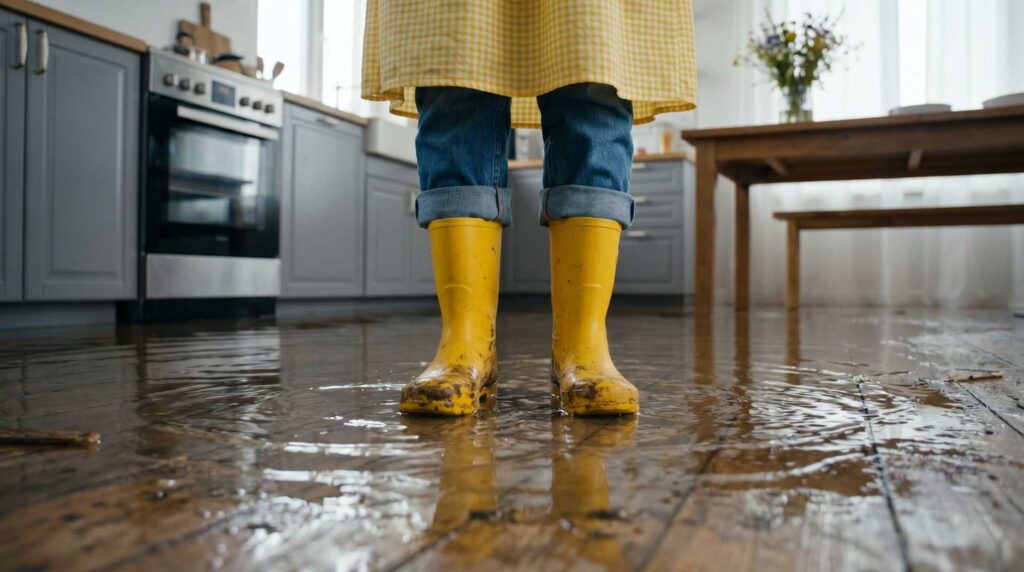
When floodwater hits drywall, you need to judge fast whether it can dry out or must come out. You can sometimes save panels that only took on limited moisture and started drying soon after exposure. But swelling, crumbling, staining, or sewage contact usually means removal. A moisture meter can confirm what the surface hides, and the lower wall often tells the real story—what you find there can change the whole drywall repair plan.
Key Takeaways
- Flood-damaged drywall may be salvageable if it was only briefly wet and dried quickly.
- Check for swelling, softness, crumbling, or discoloration; firm panels are better repair candidates.
- Remove drywall that stayed saturated too long, has mold, or was exposed to sewage or unknown floodwater.
- Use moisture meters, tapping, and edge inspections to find hidden dampness in drywall, studs, and insulation.
- Repairing small affected sections is usually cheaper than full replacement when damage is limited.
Can Flood-Damaged Drywall Be Saved?
Yes—sometimes flood-damaged drywall can be saved, but only if the water exposure was limited, the drywall was cleaned and dried quickly, and there’s no sign of structural damage or contamination.
You should inspect the wall face, seams, and baseboard area for swelling, crumbling, or discoloration. If the panel still feels firm and the insulation cavity stayed dry, flood damaged drywall repair may be possible.
You’ll want to remove any wet trim, open small access points, and confirm the wall isn’t hiding mold, sewage, or soaked insulation. If the damage is localized, you can cut out the affected section and patch it cleanly.
If the sheet softens, breaks apart, or smells musty, replace it. Acting fast helps you protect your space and keep your crew on the same page.
What Drying Tells You About Drywall Damage
As drywall dries, it quickly shows whether flood damage is recoverable or not. You can watch for surface flattening, firm edges, and a return to normal stiffness.
If the panel stays swollen, gritty, or soft after controlled drying, moisture has likely moved deeper than the face paper. Use low humidity, airflow, and gentle heat to speed evaporation, but don’t trap dampness behind finishes.
Check seams, corners, and fastener spots first, because they reveal distortion sooner than broad wall areas. You’ll also notice odors fading as moisture leaves the gypsum core.
When the board dries evenly, you’re seeing a better repair candidate. When it dries unevenly, you’re getting a clear warning that the material’s structure has changed and needs closer evaluation from your restoration team.
When Flooded Drywall Must Be Removed
Flooded drywall must be removed when it has lost structural integrity, stayed saturated too long, or absorbed contaminated water. You can’t safely save panels that crumble, sag, or separate from framing because they won’t hold finishes or resist mold.
If water rose above the baseboard, inspect the lower section closely; once the gypsum core softens, removal usually beats repair. You should also cut out any drywall touched by sewage, storm runoff, or unknown floodwater, since cleaning won’t make it sanitary.
Remove material in clean, manageable sections, and expose the cavity so adjoining surfaces can dry fully. That approach helps you protect the rest of the room, reduce lingering odors, and move forward with a rebuild your household can trust.
How Pros Test Wet Drywall
Pros check wet drywall by measuring moisture content, inspecting the paper face, and probing the lower edge for softening or delamination. You’ll usually see them use a pin or pinless moisture meter to compare affected areas with dry sections nearby.
They also tap the wall to listen for hollow spots, then cut a small inspection opening if readings stay high or the surface feels spongy. You can expect them to check studs, insulation, and the baseboard zone for hidden dampness, because water often tracks downward.
They’ll mark each panel, record readings, and watch for staining, swelling, or mold odor. This step helps your restoration team judge whether the drywall can dry in place and keep your project moving with the right crew.
Repair vs. Replacement Costs
Repairing a small section of flood-damaged drywall is usually cheaper than full replacement, but the final cost depends on how long the material stayed wet, how much of the wall was affected, and whether mold or insulation damage is present.
You’ll often save money when you can cut out only the ruined area, dry the cavity, and patch the surface. Full replacement costs more because you pay for demolition, disposal, new board, tape, mud, sanding, and repainting.
- Inspect hidden damage early.
- Price labor and materials separately.
- Compare drying time with tear-out costs.
- Factor in mold testing and insulation replacement.
If you act fast, you protect your home and keep your crew’s work focused, efficient, and worth the spend.
Frequently Asked Questions
How Soon Should Flood-Damaged Drywall Be Inspected?
You should inspect flood-damaged drywall within 24 hours, ideally sooner. You’ll catch hidden moisture early, limit mold growth, and decide whether you can dry it or need removal before damage spreads farther.
Can Mold Develop Inside Drywall After Flooding?
Yes—mold can grow inside drywall, like a hidden seed in a wall. You’ll need prompt inspection, moisture checks, and possibly removal. If you catch it early, you can protect your home and crew.
Does Insulation Behind Drywall Also Need Replacement?
Yes—if insulation got wet, you’ll usually replace it too. You should remove soaked batts or contaminated foam, since they trap moisture and mold. Drywall teams inspect cavities, then decide what can safely stay.
Will Paint or Wallpaper Hide Hidden Water Damage?
No, you can’t rely on paint or wallpaper to hide water damage; you’ll trap moisture, stain returns, and mold can spread. You should inspect, dry, and replace damaged materials before finishing, so your walls stay sound.
How Long Does Professional Drywall Drying Usually Take?
Professional drywall drying usually takes 24 to 72 hours, but you’ll need longer after deep saturation. Don’t rush it; you can still protect your home while technicians monitor moisture, airflow, and structural stability.
Wrap-Up
When floodwater soaks your drywall, you need to read the signs fast. If it’s drying evenly, holds its shape, and stays clean, you may be able to save it with careful drying and monitoring. But if it swells, crumbles, or smells foul, tear it out before hidden damage spreads. Use a moisture meter, check the lower edges, and act quickly. With the right call, you can turn a damp, ruined wall into a solid repair.