

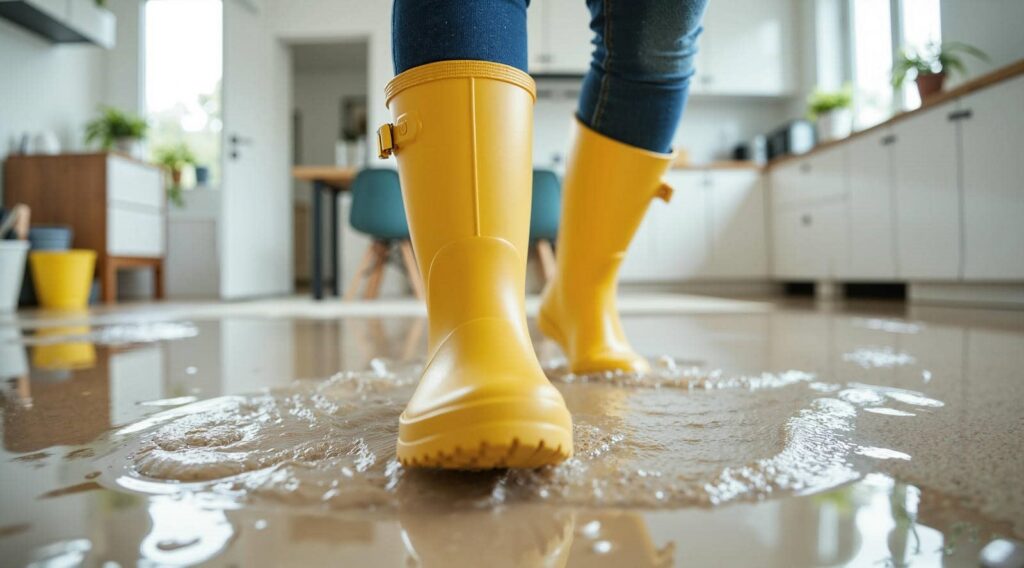
When water enters your home like a silent tide, you need to act fast. You should shut off power if it’s safe, stop the source, and remove standing water with pumps or wet vacs. Then you’ll need to dry walls, floors, and contents before moisture turns into mold. Some damage stays hidden, though, and that’s where the next decision matters most.
Key Takeaways
- Enter only if safe, wear protective gear, and shut off power and the water source immediately.
- Remove standing water with pumps or wet vacuums, working in sections to avoid missed areas.
- Dry walls, floors, and cavities quickly using dehumidifiers, air movers, and moisture meters.
- Remove wet porous items, document damage, and isolate saturated belongings for professional assessment.
- Call flood cleanup professionals for sewage, hidden moisture, electrical risks, or large-scale water intrusion.
What To Do First After Flooding
After flooding, you should act quickly to protect safety and limit damage. First, enter the area only if conditions are stable, and wear gloves, boots, and eye protection before you inspect affected spaces.
Document visible damage with clear photos and brief notes, because that record supports claims and cleanup planning. Remove wet rugs, cardboard, and other porous items that can’t be sanitized, then sort salvageable items from disposal items.
Open windows if weather allows to improve ventilation and reduce humidity. Contact a trusted emergency flood cleanup team promptly so your crew can begin assessment, debris removal, and controlled drying.
Shut Off Power And Stop The Water
You should turn off the main power immediately if water has entered the structure to reduce the risk of electrical shock and equipment damage.
Next, stop the active water flow at the main supply valve to limit ongoing intrusion and further saturation.
These two actions help stabilize the site and support safer emergency flood cleanup.
Turn Off Main Power
Before entering a flooded area, shut off the main power at the breaker if you can do so safely and stop the water source immediately to limit further damage.
You protect yourself and your team by treating standing water as energized until you’ve verified otherwise. Use dry hands, insulated footwear, and a stable path, and never reach into water near outlets, appliances, or cords.
If the breaker panel is compromised, stay clear and call a licensed electrician or utility provider.
Once power’s off, confirm that critical equipment won’t restart unexpectedly. Document the shutoff for your records and for your restoration partner.
Taking this step early helps your household or facility stay safer, reduces electrical risk, and keeps your cleanup crew aligned on the next controlled action.
Stop Active Water Flow
Once the main power is secured, stop the active water flow right away by closing the main water shutoff valve, isolating the affected fixture, or stopping the source at the equipment supply line if it’s accessible and safe.
You should act fast, because every minute of uncontrolled flow increases structural saturation, microbial risk, and cleanup time.
If you can’t identify the source, call your plumber, facility team, or utility provider immediately and keep everyone clear of pooled water.
Use towels or temporary containment only after the source is controlled.
Document the leak location and shutoff status so your response team can verify conditions quickly.
When you take these steps together, you help protect your home, your crew, and the recovery process.
Remove Standing Water Fast
Swiftly remove standing water to limit structural damage, mold growth, and contamination spread.
You should start with a submersible pump for deep pooling, then switch to a wet vacuum for shallow water and residual pockets. Work in sections so you can track progress and avoid missing hidden accumulations near walls, under fixtures, and along edges.
Wear waterproof boots, gloves, and eye protection, because floodwater can carry sewage, chemicals, and sharp debris. Use grounded equipment and keep cords clear of water paths.
If the volume exceeds your tools or the water keeps returning, call a qualified response team right away. Fast extraction helps you regain control, reduces safety risks, and gives your cleanup crew a cleaner, more stable environment to work in.
Dry Out Walls, Floors, And Contents
You’ll need to dry wall cavities quickly with controlled airflow and dehumidification to stop hidden moisture from spreading.
You should extract residual floor moisture and monitor materials until readings confirm acceptable dryness.
You can then assess wet contents for salvage, clean and dry recoverable items, and discard anything that can’t be safely restored.
Drying Wall Cavities
Drying wall cavities quickly is essential after a flood because trapped moisture can keep spreading damage behind drywall and into framing, insulation, floors, and contents.
You should remove baseboards, drill inspection holes, and open selected wall sections so air can move through the cavity.
Position dehumidifiers and air movers to create balanced airflow, and monitor moisture with meters until readings return to safe levels.
If insulation stays wet, you’ll need to remove and replace it to prevent odor, microbial growth, and hidden deterioration.
You protect your property best when you act as a coordinated team, document each affected area, and verify drying progress daily.
This approach helps you restore stable building conditions, reduce secondary damage, and get your space back to a healthy, familiar state sooner.
Floor Moisture Removal
Once wall cavities are opened and airflow is established, remove standing water and residual floor moisture so the drying process can stabilize the entire structure.
You should extract water from carpet, pad, and hard-surface flooring with truck-mounted or portable vacuums, then verify moisture levels with a calibrated meter.
Aim fans across the floor surface and pair them with dehumidifiers to pull vapor from the air.
If baseboards, underlayment, or subfloors remain damp, you need to expose those materials and continue targeted drying until readings return to acceptable levels.
Keep pathways clear so your team can work efficiently and safely.
When you monitor progress consistently, you help protect the building, reduce secondary damage, and support a coordinated recovery effort that everyone can trust.
Salvaging Wet Contents
After the structure is stabilized, salvage wet contents by sorting items quickly and separating what you can clean from what you must discard.
You should move unaffected belongings to a dry staging area, then label each item by material, value, and restoration potential. Hard goods, glass, and sealed plastics often respond well to washing and disinfection.
Porous materials, such as carpet pad, upholstered cushions, and paper files, usually need removal if saturation is deep or contamination is present.
You’ll protect your team when you wear gloves, boots, and respirators as needed. Keep airflow steady with fans and dehumidifiers, and elevate salvageable items off wet floors.
Document losses with photos and inventory notes so your insurer can verify claims. Working methodically helps your group recover faster and with less stress.
Save Furniture And Belongings
Move furniture and belongings out of floodwater as quickly as possible to limit absorption, staining, and structural damage. You should lift items onto blocks, pallets, or foil-covered supports so air can circulate underneath.
Remove cushions, drawers, and loose components, then separate furniture by material: wood, metal, upholstery, and electronics. Wipe off visible mud with clean water and dry cloths before residue sets. Protect finishes with padded handling, and keep heavy pieces upright to avoid joint stress.
Bag small items, label them, and store them in a dry, ventilated area. Photograph each item for records before moving it. Work with a helper to reduce strain and prevent breakage.
If an item stays saturated, isolate it for professional assessment and drying to improve recovery chances and preserve your belongings.
How To Spot Mold After A Flood
You can spot mold after a flood by checking for visible growth on walls, baseboards, drywall, and porous materials.
You should also note any musty odor, since that often signals hidden moisture and microbial activity behind surfaces.
If you detect either sign, you’ll need to inspect the area promptly and start remediation before the damage spreads.
Visible Mold Signs
How can you tell if floodwater has already triggered mold growth? You can inspect affected surfaces for visible colonies that appear within 24 to 48 hours on damp drywall, insulation, carpet backing, wood, and HVAC components.
Look for discoloration that ranges from white and gray to green, black, or brown, and note any fuzzy, powdery, or slimy texture. Check seams, baseboards, subfloors, and the underside of furniture where moisture lingers.
If paint blisters, drywall softens, or materials stain in patchy rings, mold may already be spreading behind the surface.
In a shared cleanup effort, you protect your home and your team by documenting findings, isolating contaminated areas, and arranging professional remediation before demolition or reconstruction begins.
Musty Odor Clues
If mold has started growing after a flood, a persistent musty, earthy, or damp-basement odor is often one of the earliest clues, even when visible growth isn’t obvious yet.
You may notice the smell in drywall cavities, under flooring, or inside HVAC returns. Trust that signal: odor often means moisture remains trapped and microbial activity is active.
Check areas with poor airflow, saturated insulation, and hidden voids behind cabinets or trim. If the smell intensifies after you close windows or run the system, you’re likely dealing with concealed growth.
Don’t mask it with fragrance; identify the source, dry materials fast, and remove contaminated porous items. Acting early helps protect your space, your health, and your recovery team.
When To Call Emergency Flood Cleanup Pros
Call emergency flood cleanup pros as soon as standing water, sewage contamination, or soaked building materials appear, because rapid response limits structural damage and mold growth.
You should also call if water reaches electrical systems, HVAC components, insulation, or subflooring, since hidden moisture can spread behind walls and under finishes.
If the source is unclear, contaminated, or still active, a trained crew can assess hazards and stabilize the area safely.
You’ll get a coordinated team that brings extraction, drying, sanitation, and moisture mapping into one response. That matters when you need dependable help and a clear plan.
Don’t wait for visible deterioration or persistent dampness; by then, materials may already be compromised.
Prompt professional action gives you the best chance to protect your space and restore normal use efficiently.
Why Fast Flood Cleanup Reduces Repairs
Fast flood cleanup reduces repairs by limiting how long water has to soak into materials, spread through cavities, and weaken building assemblies. When you act quickly, you keep drywall, insulation, flooring, and framing closer to their original condition, so crews can focus on restoration instead of extensive demolition.
You also reduce the chance of concealed deterioration that drives larger repair scopes and longer downtime.
- You protect more of your home.
- You keep costs from climbing.
- You regain control faster.
Prompt extraction and drying also help you stay with a team that understands the pressure you’re under and works methodically. The sooner moisture leaves, the less structural stress remains, and the fewer components you’ll need to replace or rebuild.
Prevent More Water Intrusion Later
Shutting down the source of intrusion is one of the first priorities in emergency flood cleanup, because active leaks, roof openings, broken pipes, and failed seals can keep adding water after the initial event.
You should inspect vulnerable points, confirm that plumbing lines are isolated, and verify that exterior barriers still divert runoff away from the structure. If you notice compromised flashing, cracked mortar, or displaced panels, seal them with appropriate temporary materials until permanent repairs can begin.
Keep gutters, downspouts, drains, and sump outlets clear so water doesn’t back up against the building.
You also need to monitor indoor humidity and wall saturation, because hidden seepage can restart damage after visible water recedes. Acting early helps your team stay coordinated and protects shared recovery goals.
Flood Cleanup Checklist For The Next 24 Hours
During the first 24 hours after a flood, you should follow a strict cleanup sequence to limit structural damage and contamination. Start by shutting off power, documenting damage, and wearing gloves, boots, and a respirator. Then remove standing water with pumps or wet vacs, and open windows if conditions are safe.
Protect your household: isolate affected rooms and keep children, pets, and vulnerable family members away.
Remove ruined materials: discard soaked drywall, insulation, carpet, and food that can’t be sanitized.
Dry and disinfect: run fans, dehumidifiers, and apply approved antimicrobial cleaners to surfaces.
You’re not alone in this response; consistent action helps your space recover faster and lowers mold risk.
Inspect hidden cavities and call certified restoration support if moisture remains.
Frequently Asked Questions
How Do I Document Flood Damage for Insurance Claims?
You’ll document flood damage by photographing every affected area, listing damaged items with purchase dates and values, saving receipts, and recording water levels and dates. Then you should notify your insurer and keep all correspondence organized.
Can I Stay in My Home During Flood Cleanup?
You can’t safely stay if water reached outlets, contaminated materials, or structural framing. For example, after a basement backup, you’d need temporary relocation while crews dry, disinfect, and test air quality to protect your home and health.
What Personal Protective Equipment Is Needed for Flood Cleanup?
You’ll need waterproof boots, nitrile gloves, eye protection, an N95 or respirator, and coveralls. You should add hard hats if debris’s present. These PPE items help you stay safe, clean, and part of the recovery effort.
How Long Does Floodwater-Contaminated Food Stay Unsafe?
Floodwater-contaminated food stays unsafe immediately and should be discarded after any contact. You shouldn’t rely on smell or appearance; bacteria, chemicals, and sewage can persist. You’ll protect everyone by disposing it promptly and thoroughly.
Should I Disinfect Items After Cleaning Floodwater Exposure?
Yes, you should disinfect nonporous items after cleaning floodwater exposure; you’ll remove residue, then apply an EPA-registered disinfectant, follow label dwell time, and dry thoroughly. Porous items often can’t be safely disinfected and may need disposal.
Wrap-Up
After severe water intrusion, you need to act fast to limit structural damage and mold growth. Shut off power, stop the source, and remove standing water immediately. For example, if a finished basement has 2 inches of floodwater, rapid extraction and dehumidification can often save drywall and flooring. You should document damage, dry materials thoroughly, and call emergency flood cleanup pros when contamination or hidden moisture is suspected. Fast response can reduce repairs and restore your property safely.