

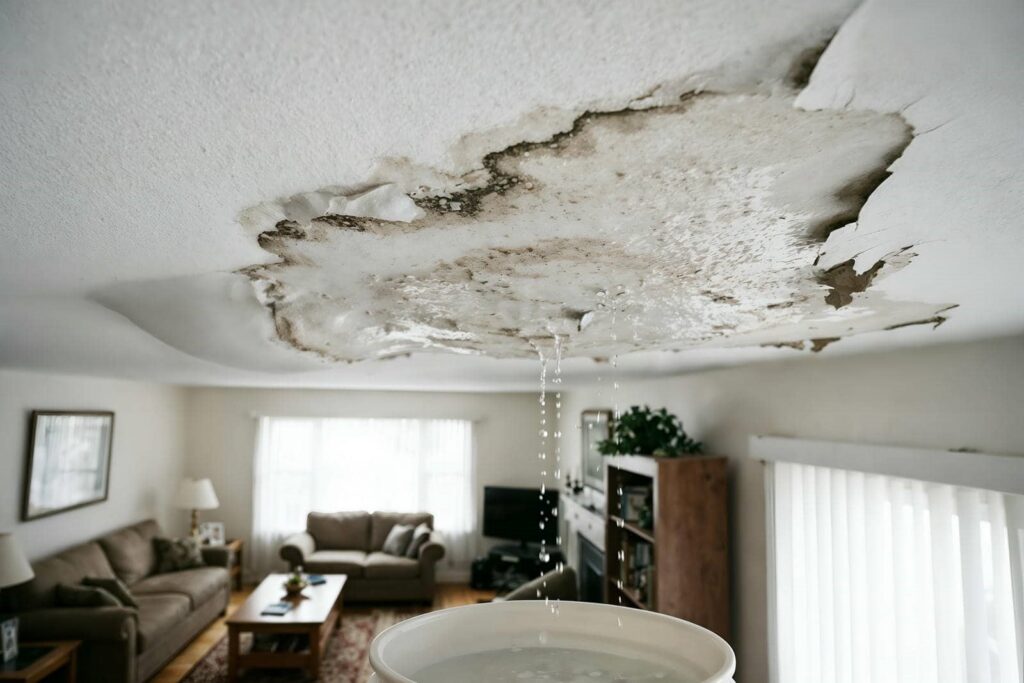
After one storm, a homeowner found a slow drip had warped an entire ceiling bay overnight, like a hidden fault line giving way. When you spot staining, sagging drywall, or damp insulation, you need to act fast. Stop the leaking roof if you can, protect the area, and start drying before mold and structural damage spread. The next steps determine whether you’re facing a simple repair or a larger restoration.
Key Takeaways
- Stop the leak if safe, protect the area, move valuables, shut off affected power, and photograph damage for insurance.
- Look for ceiling stains, bubbling paint, soft drywall, sagging insulation, warped trim, and musty odors.
- Remove soaked insulation, expose cavities, and dry framing with fans, dehumidifiers, and regular moisture checks.
- Cut out damaged drywall, tape joints, apply compound, sand, prime with stain-blocking sealer, and repaint.
- Inspect roof shingles, flashing, vents, and underlayment, then replace cracked materials and reseal fasteners.
Signs a Roof Leak Has Caused Water Damage
If a roof leak has already caused water damage, you’ll usually notice telltale changes in the affected areas before the problem gets worse.
You may see yellow or brown stains on ceilings, bubbling paint, or soft drywall that feels cool or damp.
In a room with water damage from leaking roof exposure, insulation can sag, clump, or lose thickness, which reduces its thermal value.
Walls may show warped trim, peeling tape at joints, or a faint musty odor that signals trapped moisture.
You might also spot darkened framing near vents, skylights, or exterior wall intersections.
These signs often appear together, helping you identify the leak path with confidence.
When you notice them early, you’re not alone; many homeowners face the same issue and can recognize it clearly.
What to Do First After Roof Water Damage
Act quickly to limit further damage after a roof leak: stop the source of water if you can do so safely, protect the area with buckets or tarps, and move furniture, electronics, and other belongings away from the wet zone.
Then, shut off power to affected outlets or fixtures if water’s near them, and avoid walking on slick surfaces. Document the scene with clear photos for your records and insurance claim.
Next, contact a trusted roofing professional and a water-damage restoration team so you’re not handling hidden moisture alone.
Open windows and run fans only if conditions allow, because steady airflow helps reduce dampness.
Stay calm, follow a simple checklist, and you’ll protect your home and your household with confidence and care.
How Roof Leaks Damage Ceilings and Walls
When roof leaks go unchecked, water can seep into ceiling materials, saturating drywall, weakening joint tape, and causing stains, sagging, or bubbling paint.
You may notice discoloration along seams, corners, or light fixtures before visible dripping starts. As moisture spreads, it can soften the gypsum core and break the bond between finish layers, so surfaces lose strength and flattening.
On walls, water often tracks downward inside cavities, leaving peeling paint, warped trim, and dark bands near the top edge.
If you catch these signs early, you can limit repair scope and protect the rooms you share with family.
Stay calm, document the damage, and keep the area safe until a qualified restoration team assesses the full extent.
How to Dry Out Insulation and Framing
Wet insulation and framing need prompt drying to stop mold growth and structural decay. You should remove soaked insulation that can’t be restored, then expose the cavity so air can move freely.
Position fans to sweep across framing, and run a dehumidifier to pull moisture from the air. Check wood with a moisture meter until readings return near normal, because hidden dampness can linger inside joists and studs.
- Open nearby vents to improve airflow.
- Separate wet materials so they dry evenly.
- Recheck daily for cool, damp, or musty spots.
When you act quickly, you protect the structure and keep your home’s recovery on track. You’re not handling this alone; careful drying gives your space the best chance to stay strong and healthy.
How to Repair Ceilings, Paint, and Roofing
Once the framing and insulation have dried, you can move on to rebuilding the damaged surfaces and fixing the leak source.
Cut away loose drywall, then install new panels, tape joints, and apply setting compound in thin coats. Sand lightly, prime with a stain-blocking sealer, and repaint to match the room.
If you see minor ceiling bowing, replace the affected section instead of patching over it.
On the roof, inspect shingles, flashing, vents, and underlayment around the leak path. Replace cracked materials, reseal fasteners, and add new flashing where needed.
Work methodically, and you’ll restore both structure and appearance with confidence.
When you finish, keep checking the area after storms so you can catch small problems early and protect the home you share.
Frequently Asked Questions
How Can I Tell if Mold Started After the Roof Leak?
You can tell mold started if you notice musty odors, dark spotting, fuzzy growth, or worsening allergies near damp areas. Check ceilings, walls, and insulation; if materials stay wet over 24–48 hours, inspect them.
Will My Homeowners Insurance Cover Roof Leak Water Damage?
Usually, yes—if the leak came from a sudden covered event. You’ll need policy review, photos, and prompt reporting. If wear, neglect, or gradual seepage caused it, you likely won’t get coverage.
How Long Does Roof Leak Restoration Usually Take?
Typically, you’ll need one to seven days for drying and minor repairs, but larger roof leak restoration can take two to four weeks. You’ll get faster results when you act quickly and work with qualified professionals.
When Should I Call a Professional Water Damage Contractor?
Call a professional water damage contractor as soon as you notice ceiling stains, active dripping, sagging drywall, or wet insulation. You’ll protect your home faster, reduce mold risk, and join a community that handles repairs right.
Can a Small Roof Leak Cause Structural Damage Over Time?
Yes—small roof leaks can quietly weaken framing, and 60% of hidden water damage starts above ceilings, spreading through wood, drywall, and insulation. You’ll protect your home by fixing leaks early, inspecting regularly, and acting fast.
Summary
When you spot a leak, act fast so small stains don’t become a house of cards. Stop the water source, protect your space, and dry every hidden cavity before mold can take hold. Remove damaged insulation, restore the framing, then repair drywall, repaint, and fix the roof above. With careful cleanup and prompt repairs, you’ll bring the ceiling back to form and keep the next storm from turning your home into a cascade of damage.