

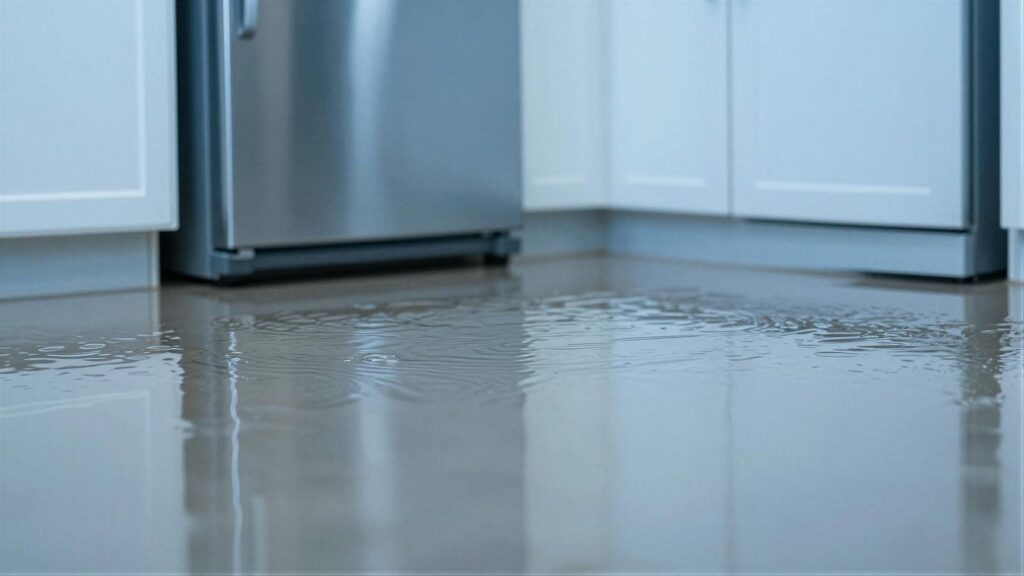
When your dishwasher, washer, or fridge leaks, you need to act fast to limit damage cleanup in kitchens and laundry areas. You should stop the water source, cut power to the appliance, and start drying the affected space right away. Even small spills can hide moisture under cabinets and behind trim, where problems can grow. The next steps determine whether you’re facing a minor cleanup or a much bigger repair.
Key Takeaways
- Shut off the appliance and water supply immediately, then cut power to prevent electrical hazards.
- Remove standing water fast with towels, a wet vac, or a squeegee.
- Open cabinets, use fans, and run a dehumidifier to dry hidden moisture.
- Clean and disinfect the affected area with detergent and a surface-safe disinfectant.
- Inspect for swelling, dampness, and musty odors; call a pro if damage reaches walls or subfloors.
Stop the Leak and Cut Power Fast
Move quickly to stop the water at its source and cut power to the affected appliance before any cleanup begins. You’re protecting your home and everyone in it when you close the supply valve, pull the plug, or switch off the breaker for a dishwasher, washer, or fridge line leak.
This first step in appliance leak water damage cleanup limits shock risk and keeps the leak from spreading into cabinets, flooring, and adjacent rooms. Check for active dripping, then verify the appliance is fully isolated.
If you can’t reach the valve safely, shut off the branch supply or main water line. Stay calm, stay methodical, and act as a team with anyone nearby so you all can move forward with confidence.
Dry the Leak Area Quickly
Once the water is off, you need to dry the leak area right away to limit swelling, staining, and hidden moisture.
Start by removing standing water with towels, a wet vac, or a squeegee, then open cabinet doors and pull out drawers so air can move through tight spaces.
Set fans to push air across the surface, not just at it, and run a dehumidifier if you have one.
Lift washable rugs and wipe baseboards, trim, and appliance feet.
Check under mats, along seams, and behind toe kicks, because moisture hides there.
Keep the room ventilated until every surface feels dry and cool, not damp.
Acting fast helps your home recover cleanly and keeps your kitchen or laundry area in the group of homes that stay protected.
Clean and Disinfect the Spill Area
After the area is dry, clean the spill zone with warm water and a mild detergent to remove residue, then wipe away any soap film so surfaces don’t stay slick or sticky.
Work from the cleanest edge toward the center, and use separate cloths for floors, cabinets, and appliance bases to avoid spreading grime.
Next, apply a disinfectant labeled for hard, nonporous surfaces, following the contact time on the product instructions. This helps you reduce bacteria after wastewater or food residue exposure.
Rinse or wipe again if the label calls for it, then dry the area completely with clean towels or a fan.
You’re doing the right thing by restoring a sanitary, safe space for your kitchen or laundry area.
Check for Hidden Water Damage
Even when the visible spill is gone, water can hide under cabinets, behind baseboards, and beneath flooring, so you’ll want to inspect those areas closely.
Look for swelling, staining, soft spots, and a musty odor, since these clues usually show where moisture collected. Use a flashlight and your hand to check for cool, damp surfaces.
- Open cabinet doors and feel the toe-kick area.
- Press gently along baseboards and laminate seams.
- Lift a corner of any loose mat or rug.
If you spot trapped moisture, keep the area ventilated and monitor it over the next day.
You’re not overreacting by checking carefully; you’re protecting your home and helping your space recover cleanly and confidently.
When to Call a Cleanup Pro
If you’ve checked for hidden moisture and still see swelling, warping, or a lingering musty smell, it may be time to bring in a cleanup pro.
You should call one when water reached subflooring, cabinets, drywall, or wall cavities, because trapped moisture can spread fast.
If the leak involved contaminated washer water, a fridge line behind finished walls, or a dishwasher overflow that soaked insulation, professional drying protects your home and your health.
A trained crew uses meters, air movers, dehumidifiers, and thermal imaging to confirm dry materials.
That precision helps you avoid hidden mold, structural damage, and costly repairs.
You don’t have to manage this alone; reliable help can restore your kitchen or laundry area and get your space back to normal with confidence.
Frequently Asked Questions
How Can I Tell if Mold Started After the Leak?
You can tell mold started if you notice musty odors, dark spots, fuzzy growth, or worsening allergies after the leak. Check hidden areas, and if moisture lingered over 24 to 48 hours, you should inspect promptly.
Will My Homeowners Insurance Cover Appliance Leak Cleanup?
Usually, yes, if the leak was sudden and accidental. You’ll need to document damage, stop the source, and contact your insurer quickly. Routine wear, neglect, and slow leaks often aren’t covered.
Should I Move Nearby Furniture During a Kitchen Leak?
Yes, move nearby furniture immediately; coincidence often means hidden moisture reaches it too. You’ll reduce staining, swelling, and mold risk by elevating pieces, padding legs, and creating airflow while you assess the leak safely.
How Do I Clean Water-Damaged Cabinets Safely?
You clean water-damaged cabinets safely by shutting off power, removing contents, drying surfaces with fans and dehumidifiers, cleaning with mild detergent, disinfecting, and checking for swelling or mold. Call a pro if damage feels extensive.
Can I Use a Wet/Dry Vacuum on Standing Water?
Yes—you can use a wet/dry vacuum on standing water; it removes up to 10 gallons fast. You’ll protect your space, reduce swelling, and help your flooring recover, but first cut power and stop the leak.
Final Thoughts
In a kitchen or laundry room, a small appliance leak can feel like a tidal wave, but you can stop the chaos fast. Cut power, dry the area, and clean every wet surface before moisture gets a foothold. Check under cabinets and behind baseboards for hidden damage, since water loves to hide like a sneaky intruder. If you spot swelling, odors, or structural wetness, call a cleanup pro right away.