
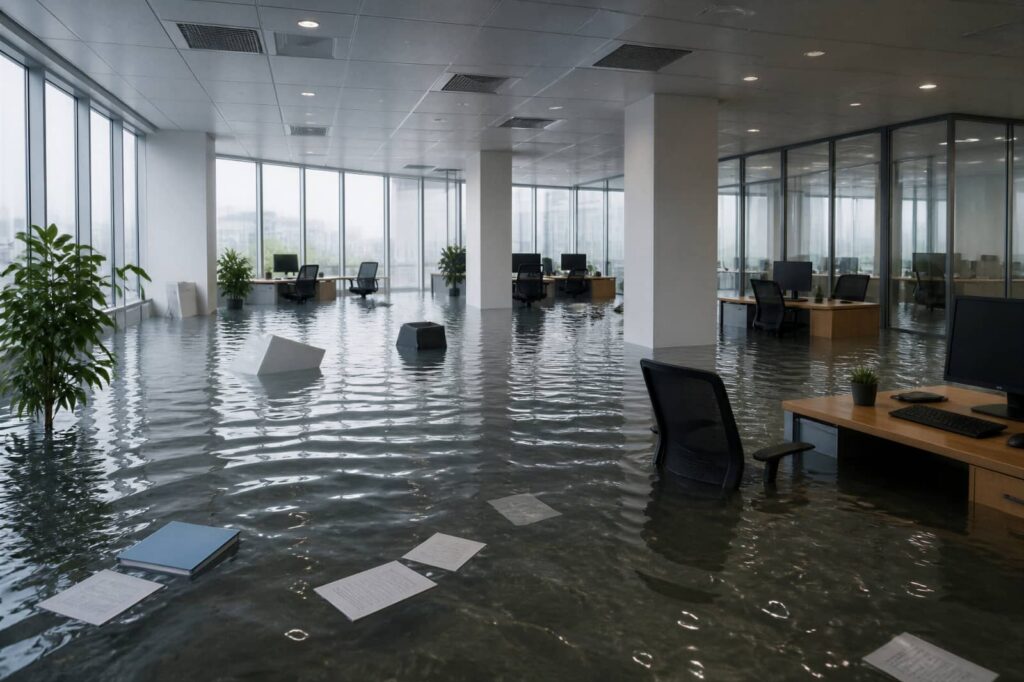
When water enters your facility, you need a response that protects operations, equipment, and timelines. Commercial emergency water removal goes beyond pumping out standing water; it includes moisture mapping, extraction, structural drying, and contamination control. If you wait, damage spreads fast and recovery costs rise. The difference between a brief interruption and a prolonged shutdown often comes down to the first few hours—and the partner you choose next.
Key Takeaways
- Rapid commercial water removal limits structural damage, mold growth, and spread into critical business areas.
- 24/7 emergency extraction with commercial-grade equipment reduces downtime and speeds restoration.
- Moisture mapping and documentation identify saturated zones, track progress, and support insurance claims.
- Priority drying should stabilize utilities, protect equipment, and restore essential systems like power, HVAC, and access control.
- Clear coordination with vendors, insurers, and staff keeps recovery organized and business operations moving.
What Commercial Water Removal Includes
Commercial water removal typically includes rapid water extraction, moisture mapping, structural drying, and dehumidification to stop further damage after a flood, burst pipe, or other water event.
You also get inspection of affected materials, containment of saturated areas, and setup of equipment sized for your space.
Commercial emergency water removal teams document conditions, track moisture levels, and adjust the drying plan as readings change.
You’ll often see specialized tools for carpets, walls, flooring, and concealed cavities, plus targeted air movement to support efficient drying.
If you’re part of a facility team, this process helps you coordinate with a provider that understands commercial systems and keeps your property’s restoration plan organized, precise, and aligned with your operational needs.
Why Fast Commercial Water Removal Matters
Fast commercial water removal limits damage by stopping moisture from spreading into walls, flooring, and equipment.
It also helps you reduce business downtime by restoring usable conditions sooner. Acting quickly lowers the risk of mold growth, which can begin within 24 to 48 hours.
Rapid Damage Control
When water enters your facility, every minute counts because moisture quickly spreads into flooring, drywall, insulation, and electrical systems, increasing the scope of damage and repair costs.
You need immediate extraction and containment to stop saturation from migrating into concealed spaces. Fast commercial water removal helps you isolate affected zones, protect structural materials, and reduce secondary issues like corrosion, swelling, and microbial growth.
Trained technicians use pumps, vacuums, and targeted airflow to remove standing water and lower humidity before damage deepens.
You stay in control when you act early, because prompt response supports cleaner restoration conditions and stronger asset protection.
With the right emergency team, your business joins a prepared community that responds decisively and protects what matters most.
Minimized Business Downtime
Once the water is contained, your next priority is getting operations back online as quickly as possible. Fast commercial water removal reduces idle labor, protects schedules, and helps you keep customers informed with confidence.
When you act quickly, you limit shutdown time across offices, retail floors, warehouses, and production areas. Your team can assess critical zones, isolate affected systems, and restart work in a controlled sequence. That kind of response keeps everyone aligned and keeps your business moving together.
- Restore access to essential spaces sooner
- Reduce disruption to daily workflows
- Support faster coordination with staff and vendors
You don’t just recover space; you protect continuity. With prompt service, you stay operational, maintain trust, and return to normal faster.
Early Mold Prevention
Even a brief delay in commercial water removal can create ideal conditions for mold growth, especially in porous materials, wall cavities, and HVAC systems.
You need rapid extraction, controlled drying, and moisture mapping to keep spores from colonizing hidden surfaces. When you act fast, you lower relative humidity, interrupt microbial activity, and protect your building envelope, inventory, and shared work areas.
Your team can stay aligned with a response plan that isolates affected zones, removes saturated materials, and verifies dry conditions with calibrated meters.
This approach doesn’t just limit damage; it helps your business maintain a healthy, compliant environment where people feel confident returning.
Fast action supports your recovery, strengthens continuity, and keeps your space ready for the people who depend on it.
Common Commercial Water Damage Scenarios
Commercial properties can face water damage from burst pipes, roof leaks, HVAC failures, sprinkler malfunctions, sewer backups, and flooding from storms or plumbing overflows.
You need to spot these risks early because each one can interrupt operations and strain your team. When water enters offices, warehouses, or retail spaces, it can damage inventory, equipment, finishes, and documents fast.
Burst pipes often occur during temperature swings or aging system failures.
Roof and HVAC leaks can spread unnoticed above ceilings and walls.
Sewer or storm-related flooding can introduce contamination and safety concerns.
How Commercial Water Removal Works
After identifying the source and scope of the water intrusion, a commercial water removal team begins with rapid extraction to pull standing water from floors, carpets, and low-lying areas.
You’ll see high-capacity pumps and truck-mounted vacuums move water fast, then technicians isolate affected zones to protect dry operations. They remove soaked materials that won’t recover, protect contents, and set controlled airflow to speed evaporation.
Industrial dehumidifiers then lower humidity and stop secondary damage like swelling, corrosion, and microbial growth. You stay informed through moisture readings, surface checks, and equipment adjustments.
This process helps your facility regain safe conditions quickly, so your team can reenter with confidence. When every minute matters, you benefit from a coordinated response that keeps your business on track.
How to Choose a Commercial Water Removal Partner
When you choose a commercial water removal partner, look for a team that can mobilize fast, document losses clearly, and coordinate drying without disrupting critical operations.
You want technicians who understand HVAC, electrical, and inventory exposure, then adapt their approach to your site.
Verify 24/7 availability, commercial-grade extraction equipment, and clear communication from dispatch through closeout.
Ask how they track moisture readings, produce insurer-ready reports, and maintain chain of custody for affected assets.
- Confirm industry certifications and safety protocols.
- Review response times and local coverage.
- Check references from facilities like yours.
A capable partner should make you feel informed, protected, and aligned from the first call.
Choose a crew that speaks your language, respects your workspace, and works as part of your team.
How to Reduce Downtime After Water Damage
You can reduce downtime after water damage by completing an immediate damage assessment to identify affected zones and operational risks.
Next, you should start rapid drying procedures with commercial-grade extraction and dehumidification to stabilize the space.
Then, prioritize recovery tasks so you can restore critical systems and resume operations faster.
Immediate Damage Assessment
A rapid damage assessment sets the recovery plan in motion, helping you identify affected zones, prioritize extraction, and cut downtime before water spreads into structure, inventory, or equipment.
You should inspect sources, boundaries, and access points, then document visible saturation, staining, and safety hazards. That record helps your team coordinate with one another and make fast, consistent decisions.
- Map wet areas by room, floor, and asset type.
- Flag electrical, server, and production risks immediately.
- Log photos, readings, and time stamps for claims support.
When you assess damage early, you protect workflow, reduce confusion, and keep your crew aligned around the same operational goals.
Clear findings let you mobilize the right response without delay, so your business can stay organized and recover with confidence.
Rapid Drying Procedures
Once extraction is complete, rapid drying procedures should begin immediately to stop moisture from migrating into walls, flooring, insulation, and equipment.
You’ll want to deploy high-velocity air movers to create airflow across affected surfaces and place low-grain dehumidifiers to pull vapor from the air.
Keep interior doors, cabinet fronts, and access panels open so air can circulate through hidden cavities.
Monitor moisture with calibrated meters, then adjust equipment placement as readings fall.
Maintain stable temperature and relative humidity to accelerate evaporation without stressing materials.
If you’re coordinating with a restoration team, stay aligned on drying goals and daily progress so everyone works from the same plan.
Fast, controlled drying protects your facility, supports your crew, and shortens the path back to normal operations.
Prioritized Recovery Tasks
Prioritize the tasks that restore operations fastest: stabilize utilities, protect critical equipment, and isolate unaffected areas before moving on to cleanup and repairs.
You should assign one coordinator, document damage, and keep your team aligned on the recovery sequence. That shared focus helps your crew move together, not scramble.
- Shut down compromised systems safely.
- Move servers, inventory, and records first.
- Dry, sanitize, and verify work zones.
Next, restore essential functions in order: power, communications, HVAC, and access control.
You’ll reduce secondary losses when you separate salvageable spaces from contaminated ones and verify moisture levels before reopening.
Keep vendors, insurers, and staff updated so everyone understands the plan and their role.
With disciplined priorities, your business gets back online faster and your team stays confident.
Frequently Asked Questions
Does Commercial Water Removal Cover Mold Prevention Too?
Yes, commercial water removal often includes mold prevention by extracting moisture quickly, drying materials, and monitoring humidity. You’ll reduce fungal growth risk, but you may still need antimicrobial treatment and inspection for hidden contamination.
Can Operations Continue During Emergency Water Removal?
Usually, yes—if you isolate affected zones and coordinate access, you can keep critical operations running. Why stop everything? You’ll work with technicians to protect equipment, maintain airflow, and limit disruptions while drying proceeds.
What Insurance Documents Should I Keep After Water Damage?
You should keep your insurance policy, claim number, adjuster notes, photos, videos, receipts, repair estimates, remediation reports, and correspondence. These records help you prove losses, track progress, and support reimbursement quickly.
How Quickly Can Electronics Be Salvaged After Flooding?
As fast as 24–72 hours, if you power down immediately, document damage, and dry components professionally. You’re racing corrosion like rust on a bridge; every minute matters, so act now and protect your team.
Are After-Hours Commercial Water Removal Services Available?
Yes, you can usually get after-hours commercial water removal services. You’ll contact a 24/7 team, and they’ll dispatch technicians fast, extract water, dry affected areas, and help you limit damage and downtime.
Conclusion
Commercial emergency water removal helps you protect uptime, reduce loss, and restore safe operations fast. In many cases, every hour counts: a single inch of standing water can damage thousands of square feet of commercial space, creating a clear visual of how quickly impact spreads. When you act quickly, use moisture mapping, and choose a responsive partner, you’ll limit mold risk, preserve systems, and get your business back on track sooner.